Questions to Ask an Artist Before You Buy a Painting
You have found a painting you keep coming back to. Maybe it is the color, maybe it is a feeling you can't quite name, and now a quieter, practical voice is asking what happens next. That voice is worth listening to. Knowing the questions to ask before buying art is not about being cautious for its own sake. It is how a purchase starts to feel settled and personal instead of rushed. In this post I'll walk you through the questions I think every collector deserves answers to, share how I answer them for my own paintings, and point out the ones that are best asked to me directly.
The questions to ask before buying art, and what the answers tell you
A listing can tell you a title, a size and a medium. A conversation tells you everything else. These are the questions I would ask if I were standing on your side of the easel.
What is it made of, exactly?
Start with the medium line, and don't be shy about asking what it means. "Acrylic on canvas," "mixed media," "acrylic, pen and paper" and "watercolor on paper" each describe a different surface, a different way of being displayed and a different kind of care. Works on paper, for example, are usually framed behind glazing to protect them, while a painting on stretched canvas can often hang as it is.
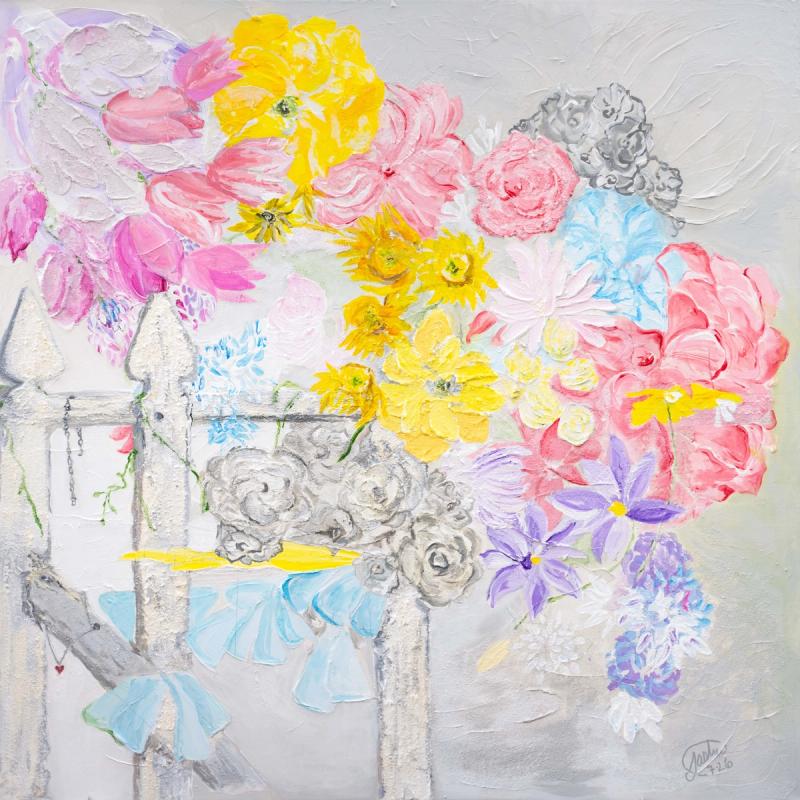
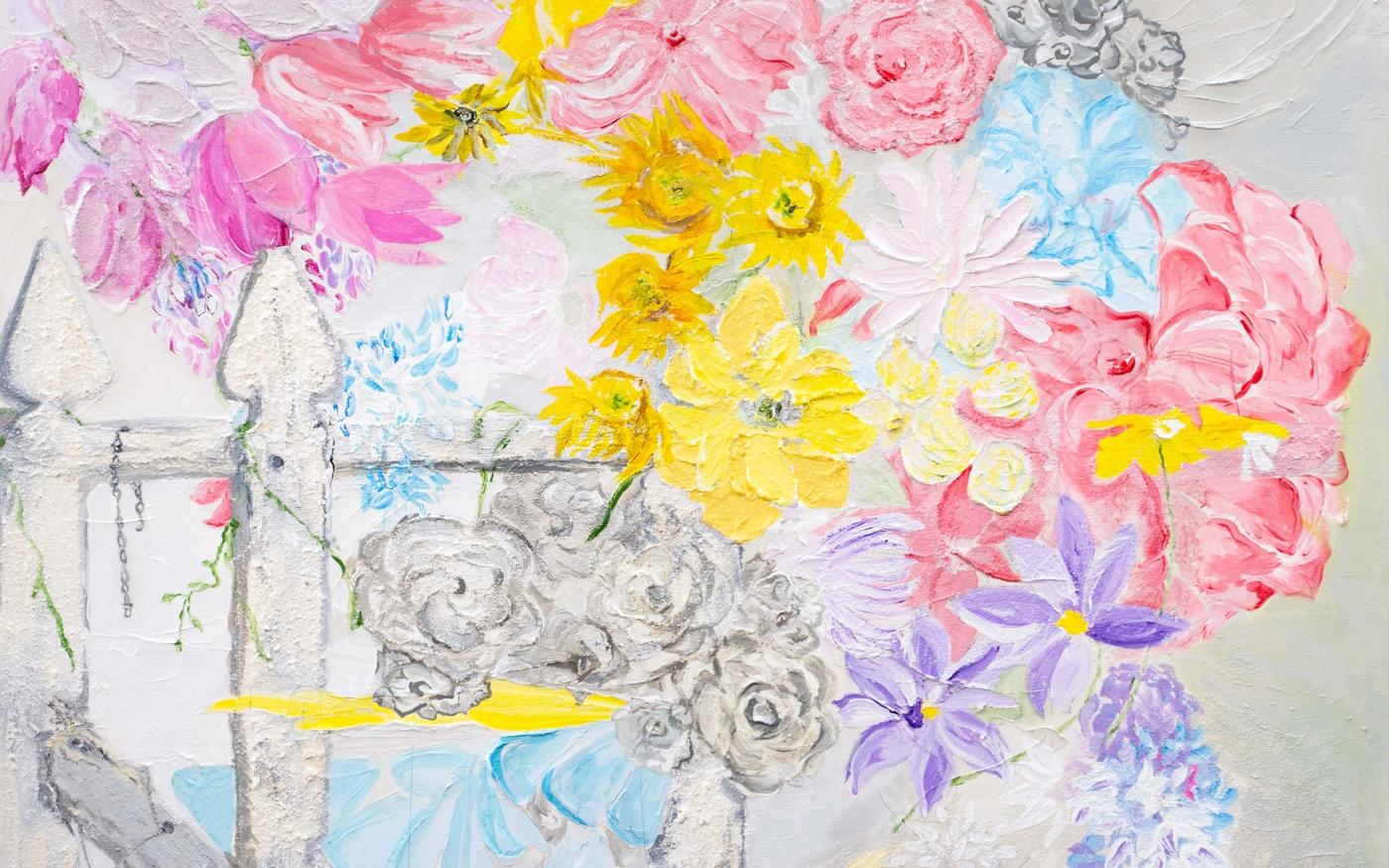
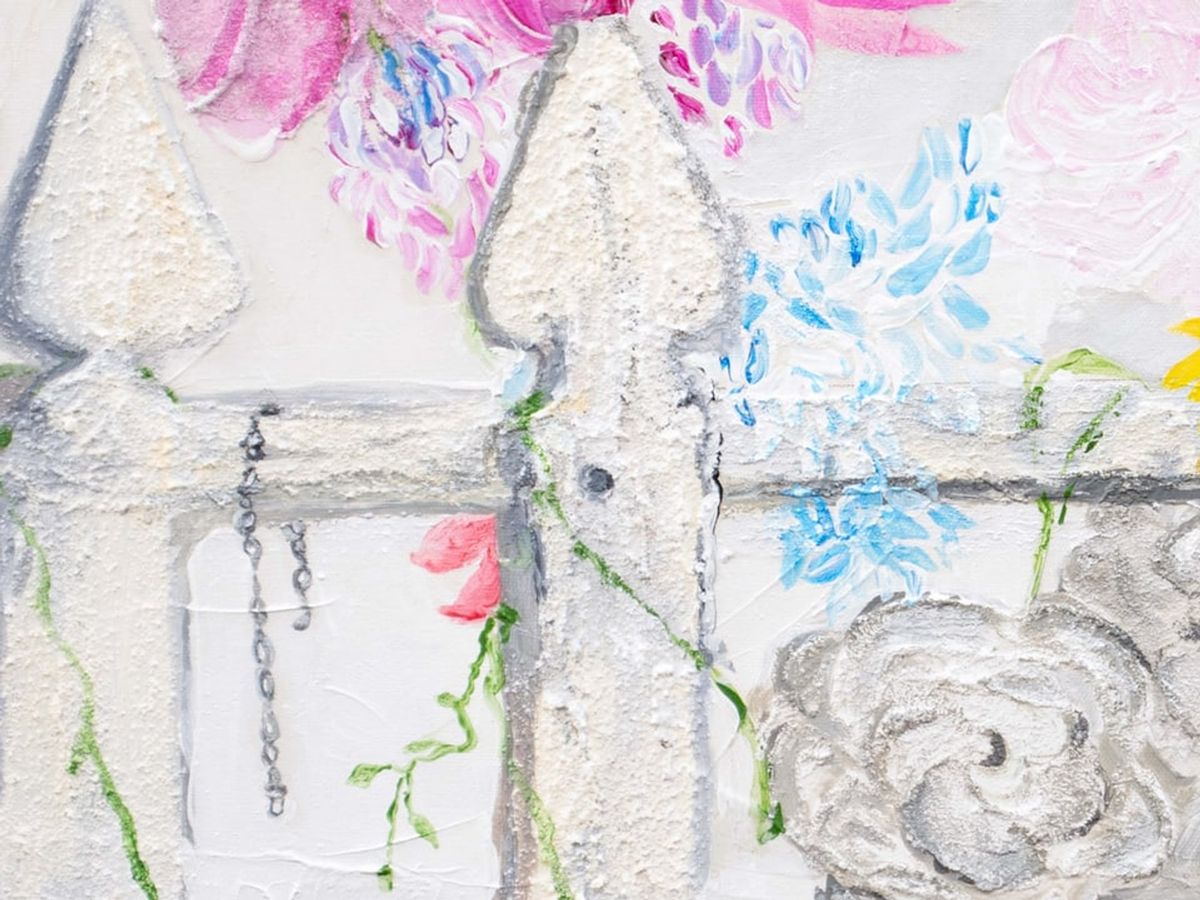
My own specialty is heavy-body acrylic impasto. Heavy-body acrylics are thick paints that hold the shape of the palette knife or brush, so I can build ridges and peaks that stand up off the canvas. In Silver Necklace, the garden is built from thick, sculpted layers, and a small silver necklace hanging on a fence post sits inside all that texture as a tender, personal detail. The story behind it is about a lost necklace, found years later on a broken, white-washed fence. The paint is how that memory becomes something you can almost touch.
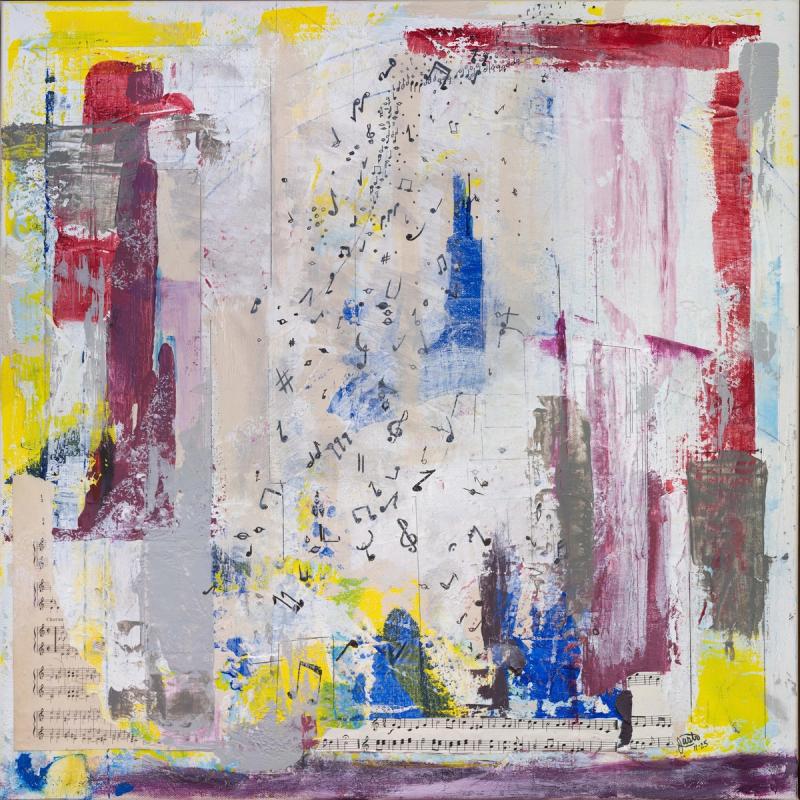
Not every painting in my studio is impasto, though. Symphonic Drift is mixed media, built from sweeping layers of color, texture and light. So ask. A clear answer tells you what you will see in person, and what the piece will need from you over time.
How are the edges finished, and is it ready to hang?
This question sounds small, and it changes everything about how a painting lives on your wall. A few terms worth knowing:
- Gallery-wrapped canvas: the canvas is stretched around the sides of the wooden frame and fastened on the back, so the sides are clean and the painting can be displayed without a frame.
- Painted edges: the artist carries the image, or a chosen color, around onto the sides, so the painting looks finished from every angle.
- Floater frame: the canvas sits inside a frame with a small gap around it, so the painting seems to float within the frame rather than being pressed under a lip.
- Unfinished edges: some canvases are made with the expectation that you will frame them. That is perfectly fine, as long as you know it in advance.
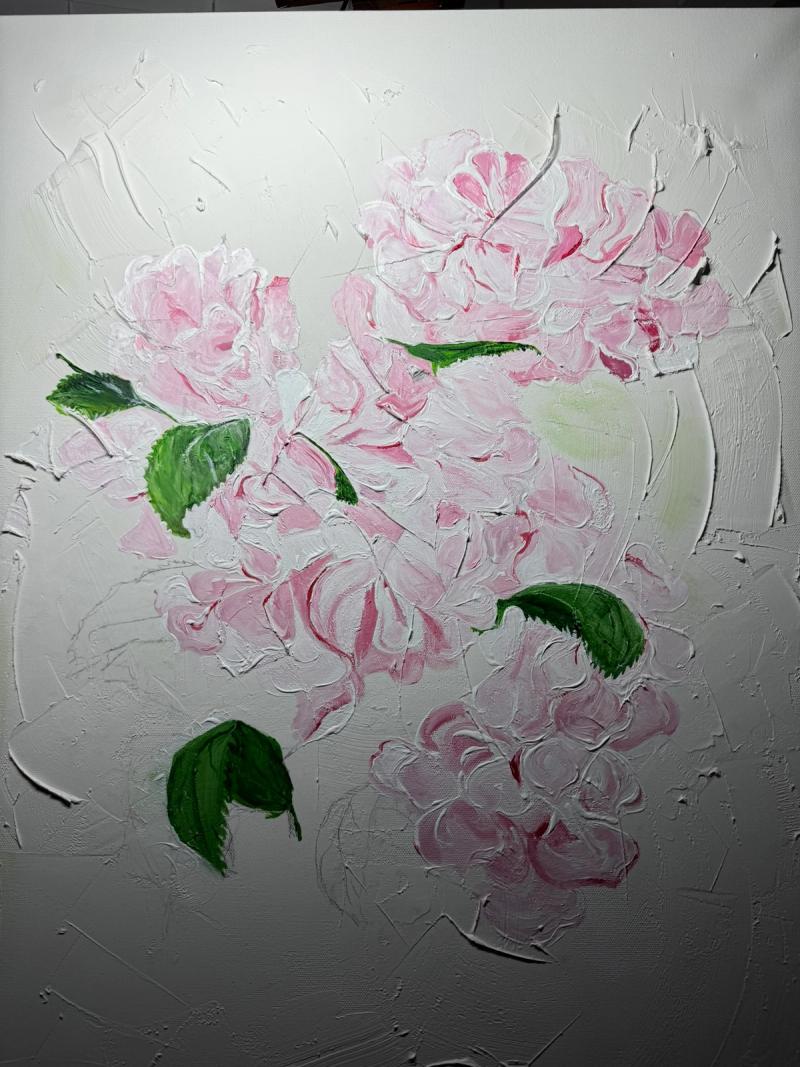
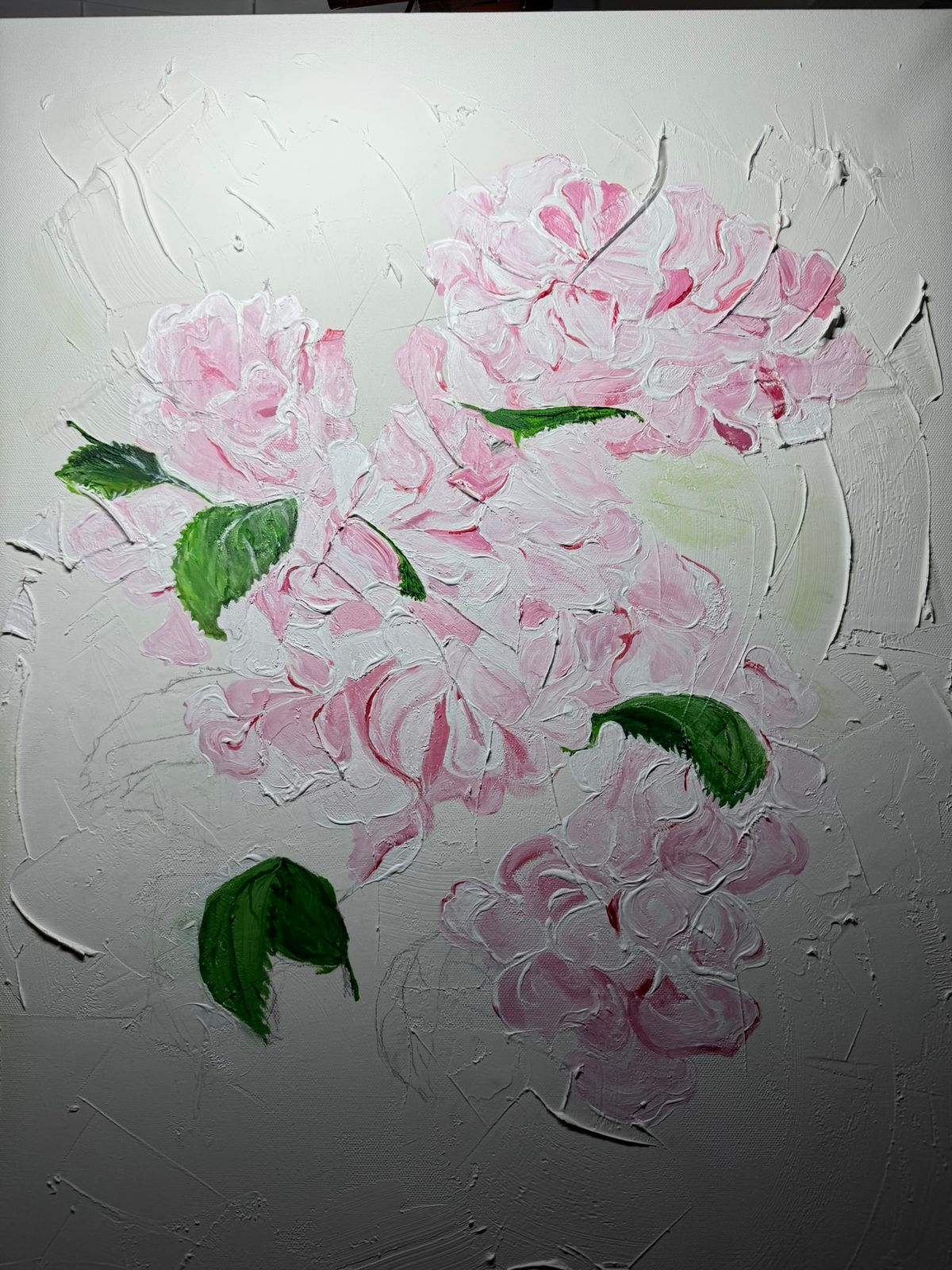
In Dancing Into Spring, the continuous gallery wrap lets the dance of the first spring blooms extend beyond the edge of the canvas. The movement doesn't stop at the front; it keeps going as you walk past.
Symphonic Drift takes the other path: it includes a textured light-brown floating frame. Neither approach is better. They simply give you different experiences in a room.
Then ask the practical part: is the piece ready to hang, and how? Hanging hardware and weight vary from painting to painting, so this is one I'm always happy to answer for the specific piece you have in mind.
How should I care for a textured painting?
Textured paintings deserve a little extra care, because their raised surfaces are an important part of the artwork. My general advice is simple: handle the piece carefully, hold it by the sides rather than the face, and avoid unnecessary contact with the painted surface. Widely accepted guidance for paintings also applies: keep the piece out of strong direct sunlight, away from damp spots and away from sources of heat. Never use water, sprays or household cleaners on the surface.
For anything beyond the gentlest dusting, ask the artist, or for older or valuable works, a professional conservator. If you have questions about displaying, cleaning or preserving one of my paintings, please contact me. I'm happy to talk through what your particular piece needs.
How will it be packed and shipped?
This matters more for textured work than most people expect. Raised paint can be scuffed or flattened by careless packing, so ask how the surface will be protected on its way to you.
I pack every piece personally, with specialized packaging chosen to protect its delicate surface. Many of my paintings travel out of state, and I work directly with collectors outside New York to arrange delivery. Shipping is arranged after purchase and calculated separately, based on the artwork's dimensions and destination. I don't offer free shipping, because of the packaging this kind of work needs. I also inspect each piece myself before it leaves my care, and if anything about its condition or shipment isn't right when it arrives, I ask you to contact me directly so we can find an appropriate resolution together.
Is this the original, or a print?
An original painting is created entirely by hand and exists as a one-of-a-kind work. A giclee print is a high-quality, archival reproduction made from an original. My hand-embellished giclee prints go a step further: after printing, I personally apply paint and texture to select areas, so each print carries real raised paint, and no two are exactly alike.
If you love a painting, it's worth asking whether a hand-embellished print of it exists, especially if the original has already found a home. I've written more about the differences in Original Painting, Giclee Print or Hand-Embellished Print?. While you're asking, you might also ask how a piece is signed. I sign my work "JASTRU."
How is the price set?
It is a fair question, and a good artist will answer it plainly. My original paintings are priced according to their size, complexity, materials and the time involved in creating them. Hand-embellished prints are priced by their dimensions and the detailed finishing work involved. Commissions are discussed individually.
Can you paint something just for me?
If nothing in a collection is quite right, ask about a commission. Every commission I take begins with a conversation: the size you have in mind, the colors you love, and the feeling you'd like the painting to bring into your space. That last part is the heart of it. I often say, "I paint what the air feels like," and a commission is a chance to paint the air of your own life. Pet portraits are available by commission too, and I welcome conversations with interior designers who are sourcing original work for a project.
The questions only you can answer
Some of the most important questions aren't for the artist at all. Before you reach out, sit with these for a moment:
- What do I want to feel when I walk into this room?
- Where will I see this painting most often, and in what light?
- Do I want a bold statement or something quieter that reveals itself slowly?
- Do I want to live with the texture up close, or enjoy it from across the room?
Light is worth a special thought with impasto. As daylight moves across a textured surface, the ridges cast small shadows that shift through the day, so the same painting can look a little different at breakfast than it does in the evening. That changing quality is part of what you are bringing home.
I paint what the air feels like.
Bring your questions to the studio
There is no such thing as too many questions when you are choosing a painting to live with. I handle every inquiry personally, because I want you to feel comfortable and informed the whole way through. You can use the "Inquire about a piece" button on any painting, write to me at janet@janetstrugats.com, or reach me through the contact page. For anything about a particular piece or a commission, email or a private message suits me better than a public comment. Whether you're curious about the edges of Dancing Into Spring, the frame on Symphonic Drift or a painting that doesn't exist yet, I'd love to hear from you.