Original Painting, Giclee Print or Hand-Embellished Print?

You've found a painting you love, and now there's a small fork in the road: the original, a print, or something in between called a hand embellished giclee. If the words sound technical, don't worry. By the end of this post you'll know what each one actually is, what you're really bringing home with each, and how to tell which one fits the way you want to live with art.
The original: the painting itself
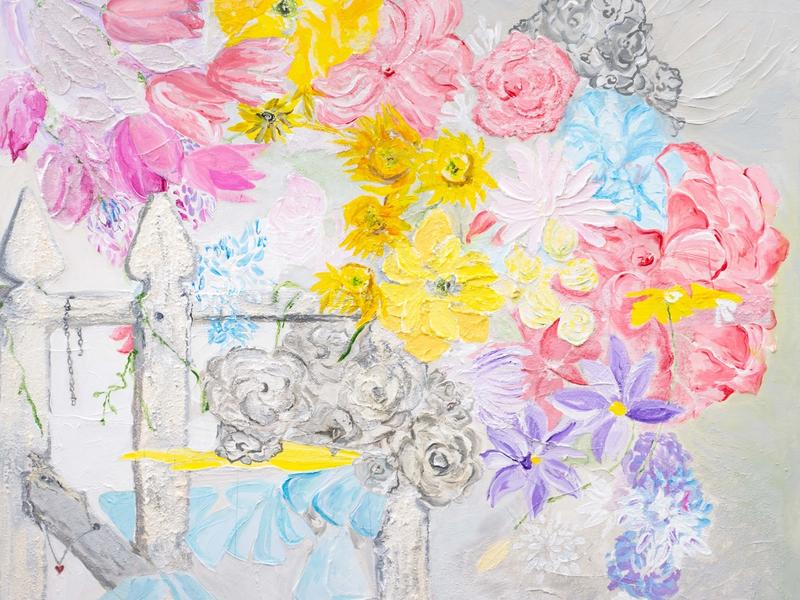
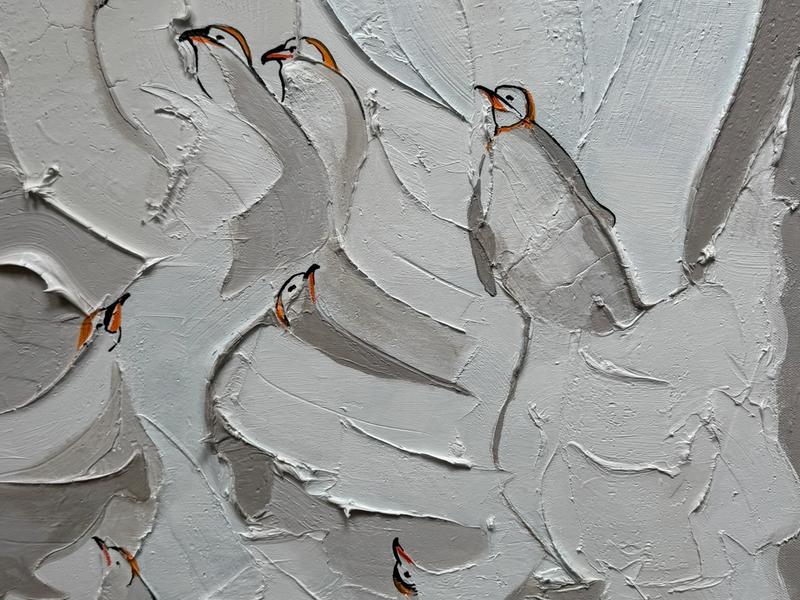
An original painting is the object the artist actually made. Every mark on it came from a hand, a brush or a knife, and there is only one. In my work that matters even more than usual, because I paint in heavy-body acrylic impasto. The paint goes on thick, often with a palette knife, and it dries into ridges, peaks and grooves that give the surface a sculptural, almost carved quality.
That physical surface isn't something sitting on top of the image. It is the image. As light moves across a textured canvas through the day, the ridges throw small shadows, and the painting looks a little different from every angle and at every hour. If you'd like the longer story of why thick paint changes how art feels, I wrote about it in What Is Impasto Painting?
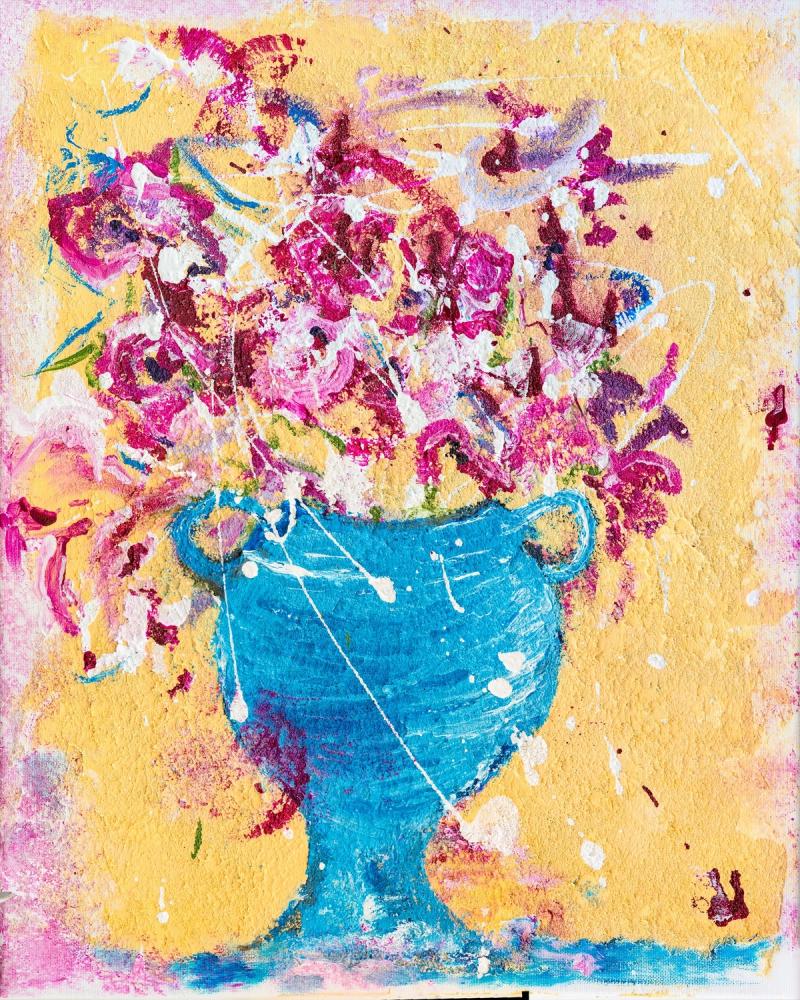
Take Wild at Heart. Magenta, fuchsia and coral blooms burst from a turquoise urn against a golden ground, loose, layered and unapologetically bold. In front of the original, you're not only seeing a bouquet. You're seeing the order the strokes went down, where one layer rides over another, where the paint was pushed and where it was left alone.
What a giclee print actually is
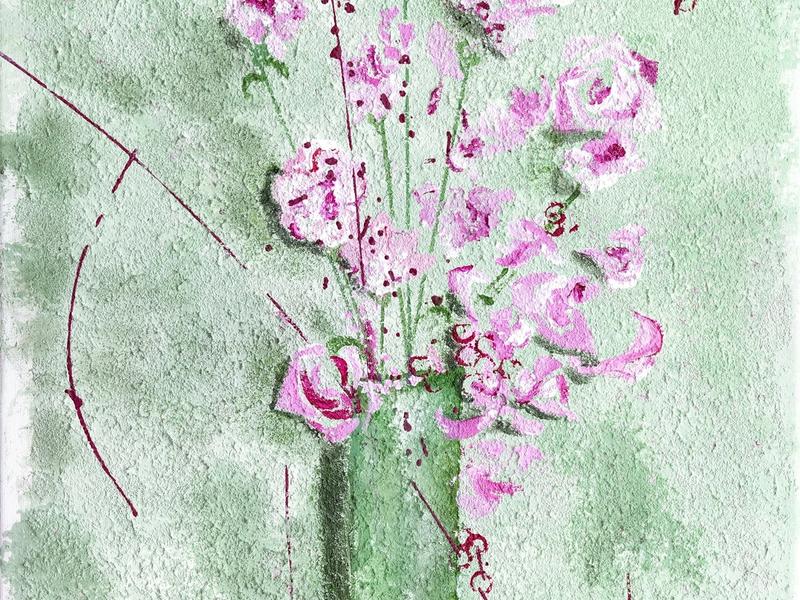
Giclee (said zhee-KLAY) comes from a French word meaning to spray or squirt, which describes the process nicely. A giclee is a fine art reproduction made on a high-quality inkjet printer that lays down very fine droplets of ink. The original painting is captured carefully, the colour is checked against the real thing, and the image is printed onto paper or canvas.
What separates a giclee from an ordinary poster is the care and the materials. Archival-quality giclees are produced with inks and surfaces selected for their long-term stability, so the work can be enjoyed for years. (Keeping any artwork out of harsh, direct sun is good sense, whatever it's made of.) I choose archival giclee printing for my reproductions because I want them to honor the original painting.
Here's the honest part, though: a giclee is flat. The printer can capture the colour of a ridge of paint, and even the shadow that ridge cast when it was photographed, but it can't rebuild the ridge itself. Tilt a flat print toward a window and the light simply slides across it. For a painter who works in thick paint, that's a real loss, and it's exactly why I don't stop at the print.
How a hand embellished giclee is finished in my studio
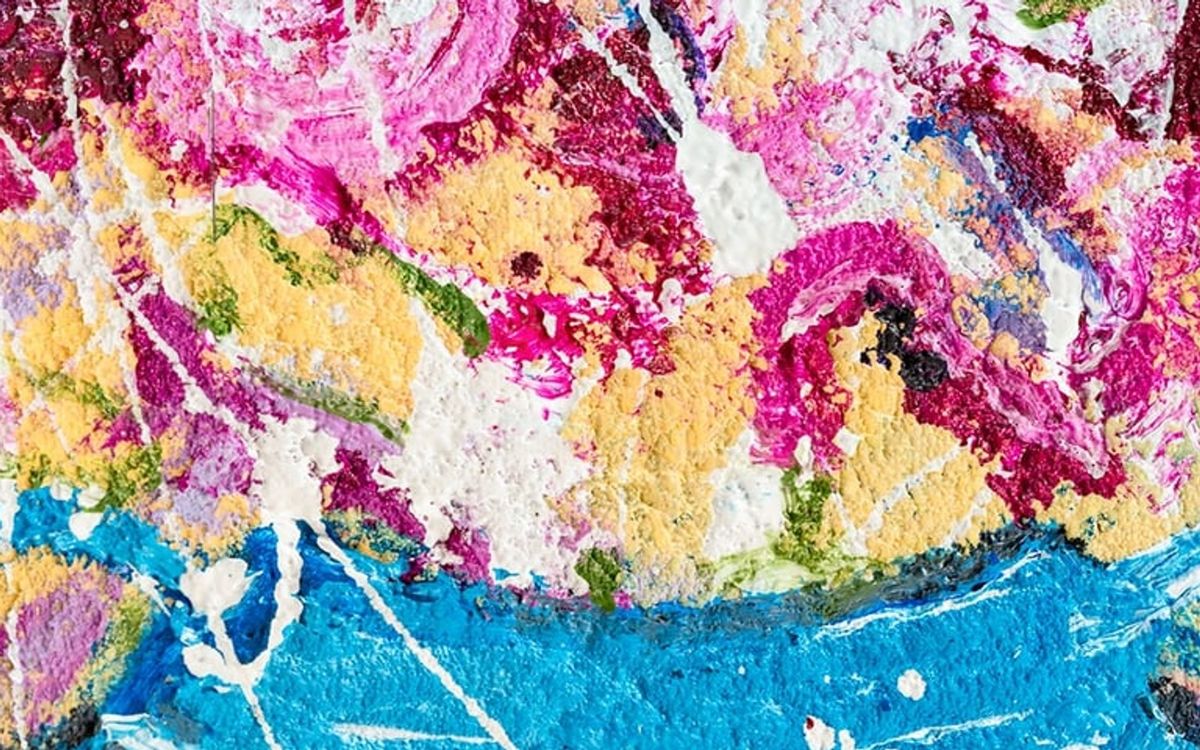
A hand-embellished giclee begins as one of those archival reproductions of an original painting. Then I work on it with real paint. I personally apply paint and texture to select areas, building raised strokes back onto the surface so the print carries genuine dimension again.
A few things follow from that:
- It has real raised paint. Not a printed illusion of texture, but actual paint standing up from the surface and catching the light the way paint does.
- No two are exactly alike. The printed image starts the same every time, but my hand doesn't move the same way twice. Texture, movement and small details shift from one print to the next, so each one carries its own character.
- It keeps the spirit of the original. I'm not repainting the picture or inventing a new one. I'm bringing back some of the dimensional quality that a flat print can't hold.
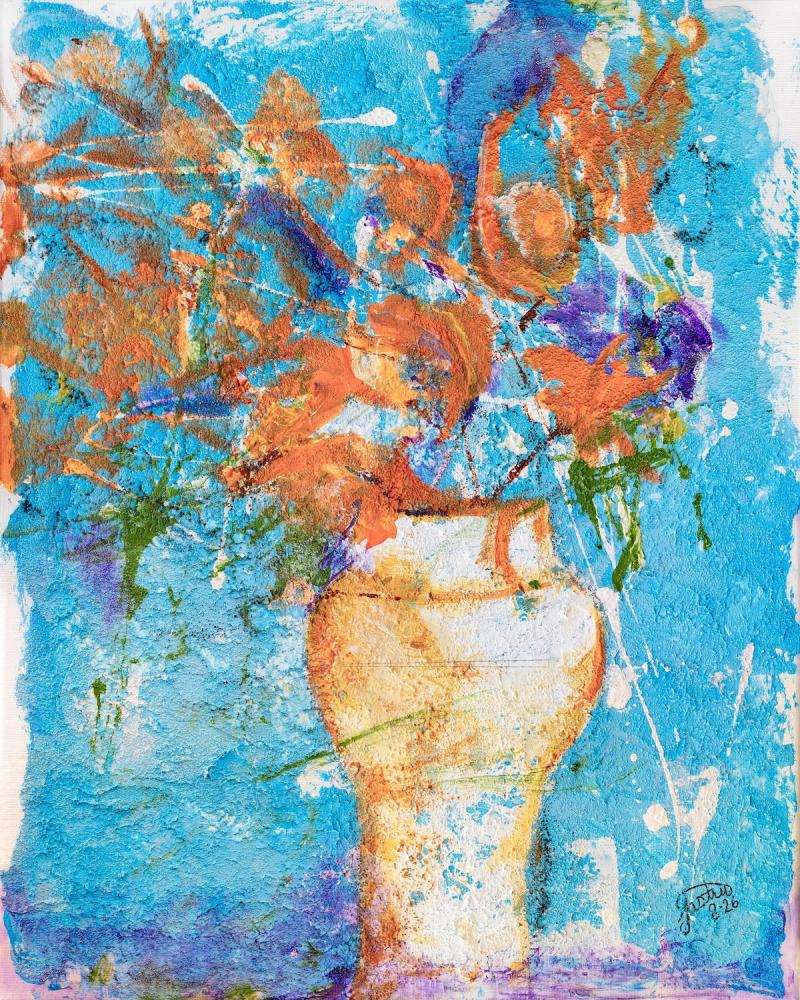
Think of Chasing the Blue, a painting that is all motion: flamboyant, swirling strokes of tangerine and rust spilling across a sky-blue ground, as if the colours were racing into the vase. A flat print would show you those swirls. Hand embellishment brings raised paint back to the surface, so that restless, always-about-to-move feeling has something physical to live in again.
Why texture is the real difference
All three options carry the colour, the composition and the story of a painting. What changes is how much of the painting's body comes along with it.
- The original gives you all of it: every layer, every ridge, every decision I made on the canvas.
- The hand-embellished giclee gives you the full image plus real texture added by hand, so it's personal and individual rather than identical.
- The flat giclee gives you the image alone, faithfully reproduced, without the physical surface.
Art should be felt as much as seen.
That's the belief underneath everything I make, and it's why texture is the first thing I'd ask you to consider. If the reason you fell for a painting was its colour or its subject, any of the three may make you happy. If what stopped you was the way the paint seemed to move, lift and catch the light, you'll want texture in whatever you bring home.
Which one suits you
There's no right answer here, only the one that fits you. These are the questions I'd think about.
An original, if you want the one and only
Choose an original if you want the single object that holds every mark, if you love standing close and discovering new things in the surface, or if you're drawn to the scale and presence of a full canvas.
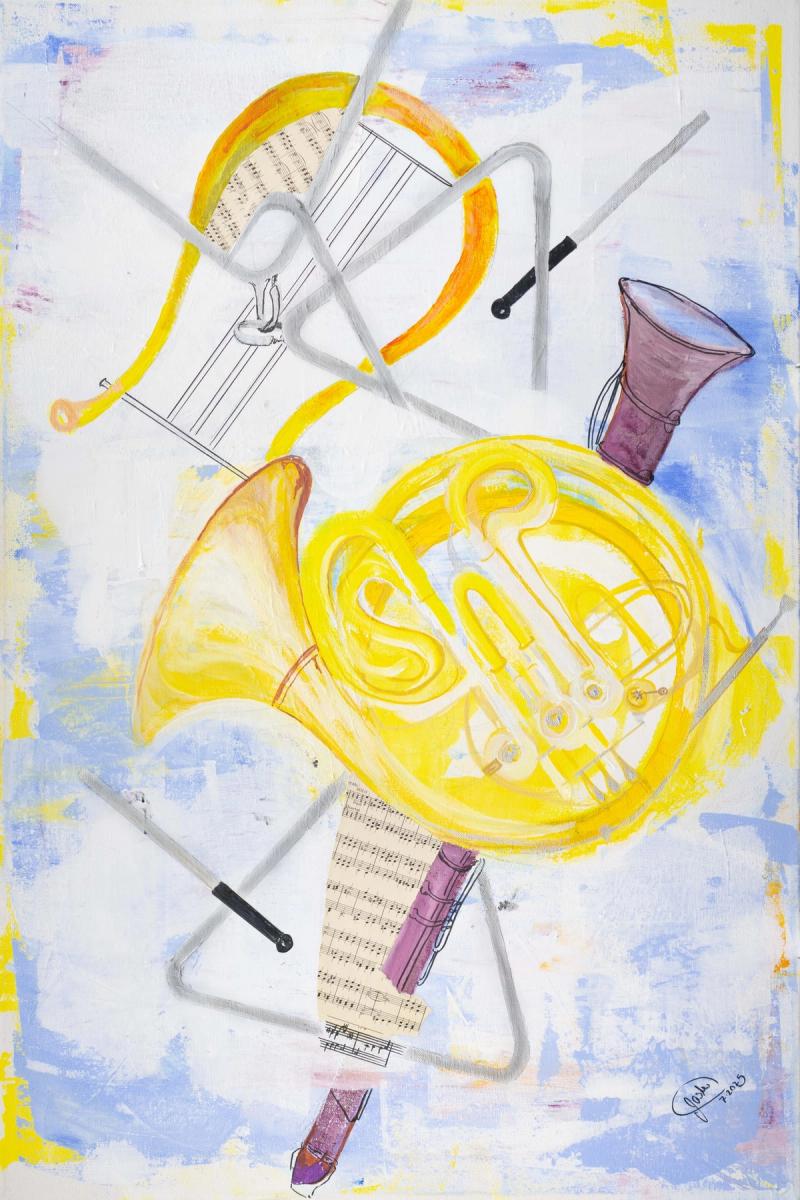
My Own Kind of Quatro is a good example of a painting with a lot to discover. Worked in acrylic and mixed media, it floats brass horns, airy lyres, triangles and snippets of sheet music across a breezy, light-filled backdrop, with a golden French horn anchoring the composition as if a whole quartet were tuning up in the open air. Layers like that are what an original gives you completely.
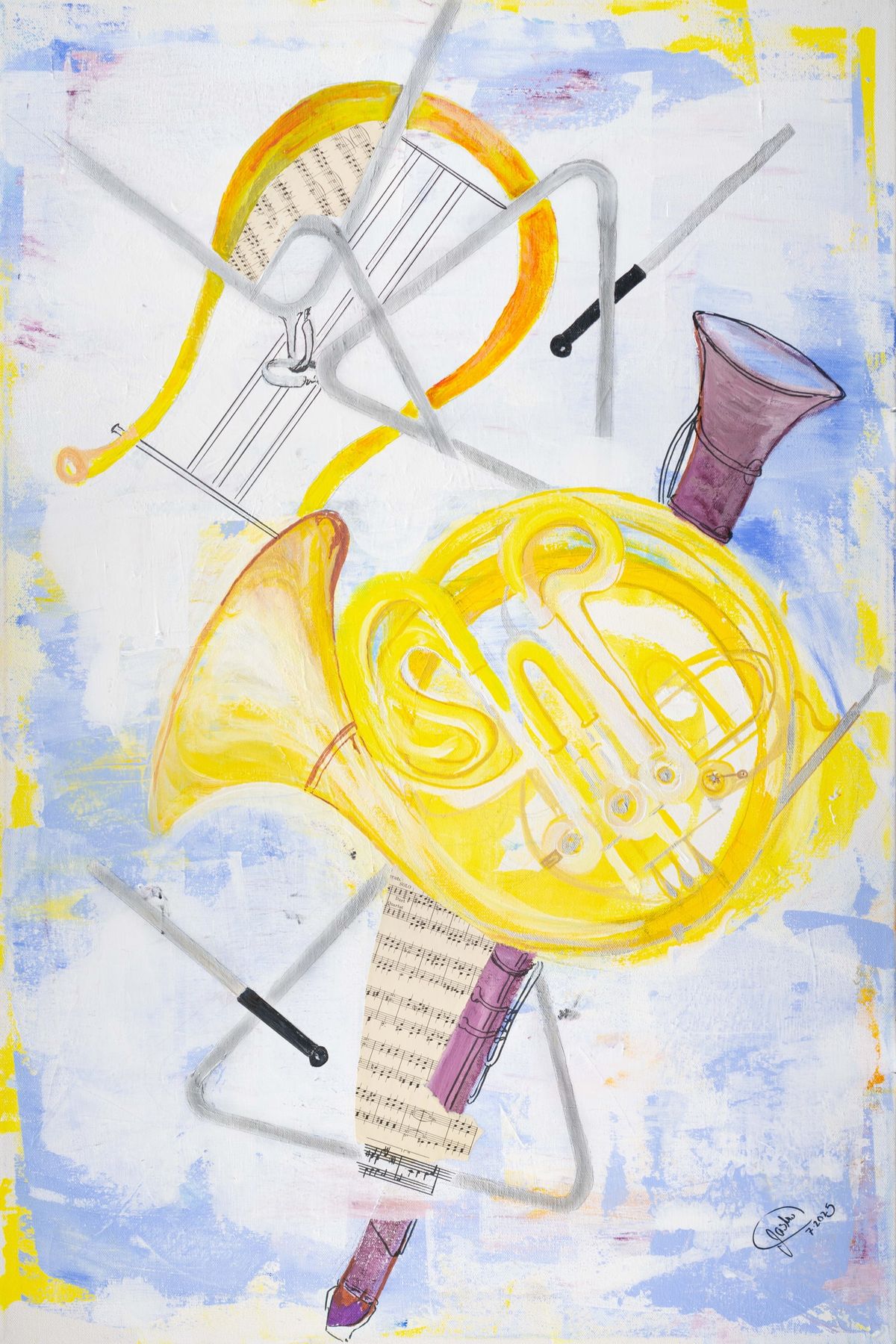
And if what you're dreaming of doesn't exist yet, an original can also be a commission. We'd talk about size, colours and the feeling you'd like the painting to bring into your space. Every commission begins with a conversation.
A hand-embellished print, if you want texture and a lighter step in
Choose a hand-embellished giclee if you love a particular image and still want real paint on the surface, if an original isn't the right fit for your space or budget, or if you simply like knowing that the piece on your wall isn't identical to anyone else's. Pricing for these prints reflects their size and the finishing work I put into each one.
A flat print, if the image is what you need
A flat giclee can be lovely when the image itself is the point: a small gift, a note to someone you care about, a little piece of colour on a desk. In my studio, that simpler spirit shows up in the Cards & Gifts collection, small pieces of the studio you can share. When a painting is something you'll live with every day, though, I'd gently steer you toward texture.
For practical questions about prints, shipping and care, my FAQ covers the details.
Start with the painting that stopped you
Whichever path you choose, begin with the painting that made you pause. The format comes second. The feeling comes first, and that's true whether you bring home an original or a print I've finished by hand.
If you're torn between the original and a hand-embellished print of the same painting, that's a lovely question to bring to me. I'm happy to talk through what each would mean for a particular piece, or to start a conversation about a commission. You can use the Inquire about a piece button on any painting, or reach me through the contact page. I'd love to hear what caught your eye.