What Is Impasto Painting? Why Thick Paint Changes How Art Feels

Maybe you've stood in front of a painting and felt the urge to reach out and run your fingers across it. The paint seemed to rise off the canvas, catching the light in little ridges and valleys, and you couldn't quite explain why it felt so alive. If you've ever asked yourself what is impasto painting, and why thick paint changes the way a painting feels, this is for you. By the end, you'll know what the word means, what to look for when you see it, how a palette knife builds depth, how textured petals come together, and the mistakes painters learn to avoid along the way. I'll also show you how all of it lives in my own canvases.
What Is Impasto Painting? A Plain Definition
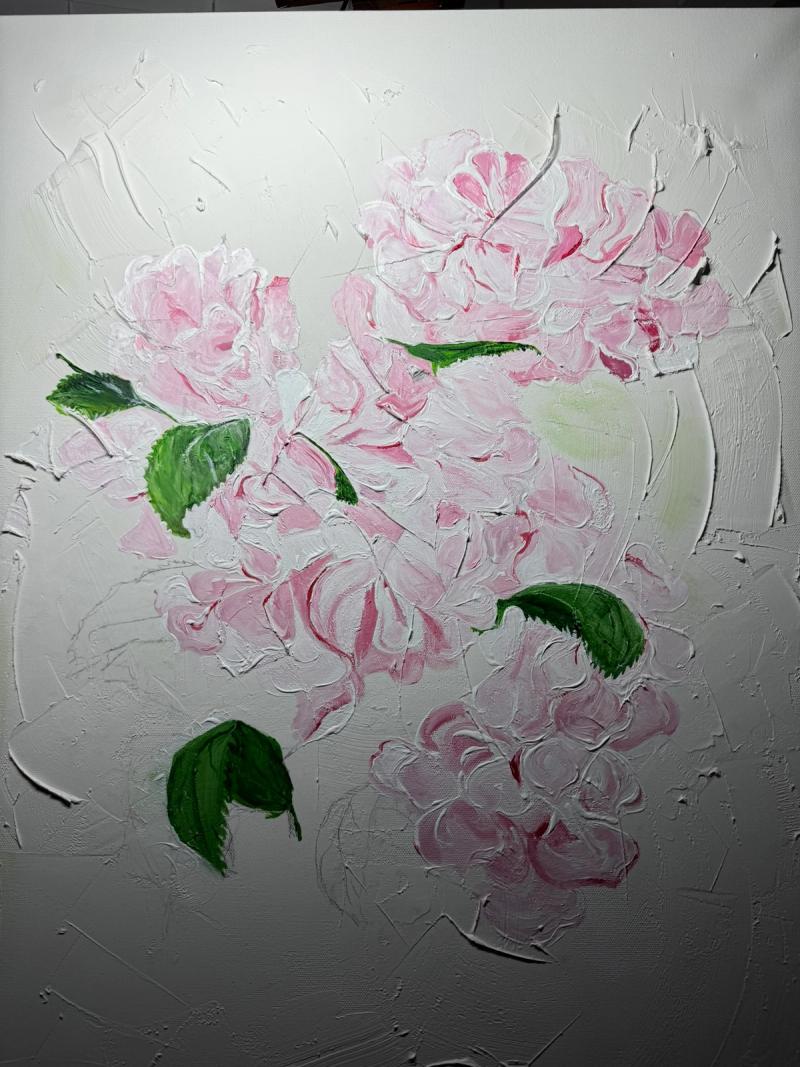
Impasto is a painting technique where paint is applied so thickly that it stands up from the surface. Instead of a smooth, flat film of color, you get raised strokes, peaks and grooves that keep the mark of the tool that made them: the drag of a brush, the press and lift of a palette knife.
The word comes from Italian and is related to the idea of paste or dough, which is a lovely way to picture it. The paint has body. It can be shaped, pushed and sculpted, and it stays where you put it.
Painters have used impasto for centuries. Rembrandt built up thick highlights so that light seemed to sit right on a sleeve or a face, and Vincent van Gogh's swirling, heavily loaded strokes are some of the most recognizable impasto in the world. If you'd like a short art-historical reference, the Tate's glossary entry on impasto is a good place to start.
In my studio, heavy-body impasto is my specialty. I work in heavy-body acrylic, applied with palette knives and brushes, building thick, sculptural layers with visible ridges and movement. Texture, emotion and movement matter more to me than flat, literal rendering.
What Thick Paint Does to a Painting
Knowing the definition is one thing. Standing in front of an impasto painting is another. Here is what actually changes when the paint gets thick.
Light catches the ridges
A flat painting shows you color. An impasto painting shows you color and then lets real light play across it. Every raised stroke has a lit side and a shadowed side. Tiny shadows gather in the grooves, and highlights rest on the crests. So on top of whatever light and shadow were painted into the picture, the surface carries its own physical light and shade.
The painting changes as you walk past
Because the surface is three-dimensional, where you stand matters. Walk past from the left and one set of ridges lights up; come from the right and others take their turn. Morning light from a window makes the painting look different than lamplight in the evening. I love this about texture. It means the painting is never quite finished being seen. It keeps a quiet conversation going with the room and the time of day.
You want to touch it
Impasto has a pull that flat paint doesn't. You can almost feel it with your eyes: the softness of a swirl, the crispness of a knife edge. I believe art should be felt as much as seen, and thick paint is how I make that possible. (A gentle note: the raised surface is an important part of the artwork, so it's best to enjoy that pull with your eyes and avoid unnecessary handling. If you ever have a question about caring for a textured piece, I'm happy to talk it through.)
Why I Paint With Heavy-Body Acrylic
Not every paint can hold a ridge. Fluid paints level out as they dry, and the shape of the stroke softens or disappears. Heavy-body acrylics have a thick, buttery consistency, so a peak stays a peak and a carved line stays carved. That thickness gives me the freedom to build rich layers of color and expressive, sculptural surfaces.
Acrylic generally dries faster than oil, which makes it practical to build layer upon layer. Very thick passages do take longer to dry all the way through than thin ones, and drying times vary with the brand, the thickness, temperature and humidity. The paint maker's own guidance is always the best guide for the specifics.
All of this serves one idea.
I paint what the air feels like.
Air has movement, temperature and mood. You can't capture it with a careful outline. But you can suggest it with a stroke that sweeps, curls or lifts off the canvas. Texture lets me paint how a moment feels, not only what it looks like.
Building Depth With a Palette Knife
A palette knife isn't really a knife. It's a flexible, blunt blade, usually steel, often with an offset handle that keeps your knuckles clear of the wet paint. Where a brush leaves soft bristle marks, a knife leaves clean edges, smooth planes and sharp peaks.
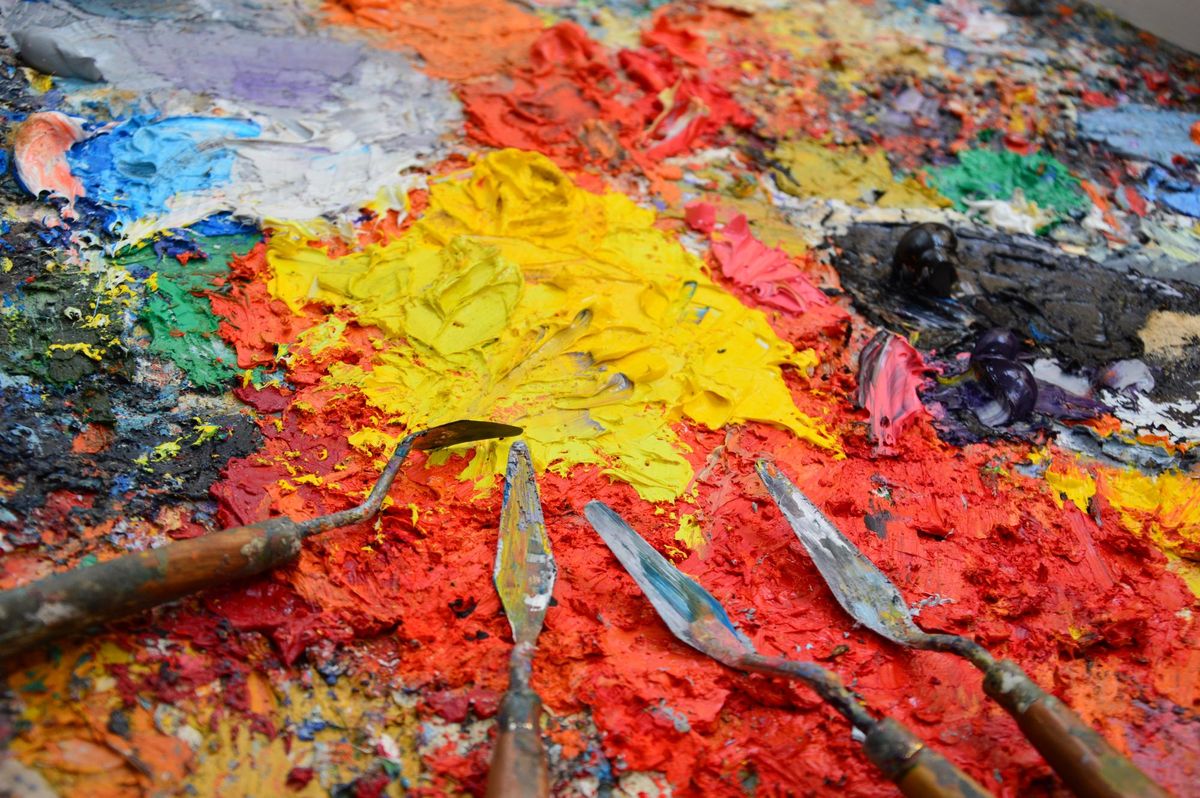
Here is the basic way depth builds with a knife:
- Start with a ground. A first layer of color sets the mood and gives the thicker work something to sit on.
- Load the blade generously. Impasto needs real paint on the knife, not a thin smear.
- Press, drag and lift. The pressure flattens paint into a plane; the lift pulls up a ridge or a little peak. How you lift decides how the light will catch it.
- Think back to front. Thinner, quieter passages tend to recede, while the thickest strokes come forward. Saving the heaviest paint for the parts you want closest to the viewer is how a flat canvas starts to feel deep.
- Let some strokes stand. The first confident mark is often the liveliest one.
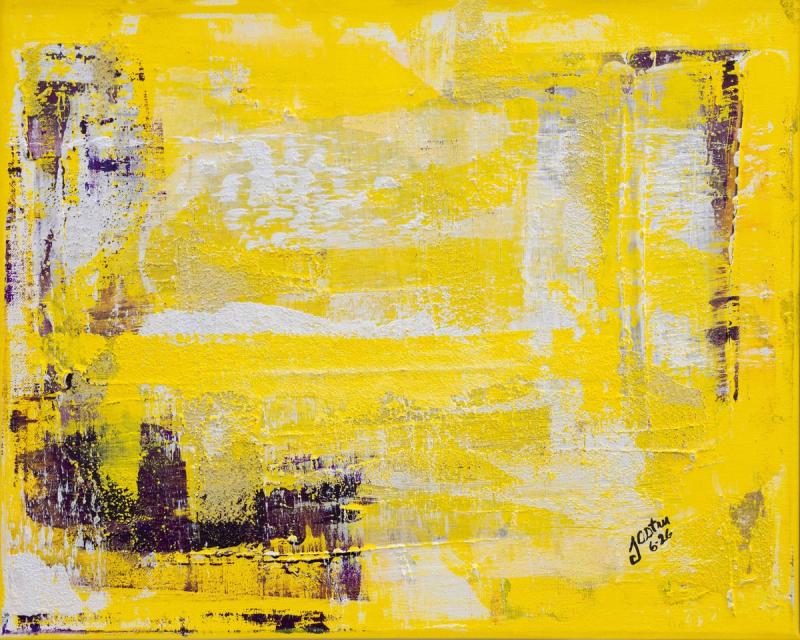
You can see palette-knife work at its most playful in Lemon Meringue. Its vibrant citrus yellows and whipped, cloud-like whites are built in rich textured layers, and the knife work evokes the sweet, tart brightness and fluffy peaks of its namesake. It's a painting that feels almost tactile to the taste, and that is the texture doing the work.
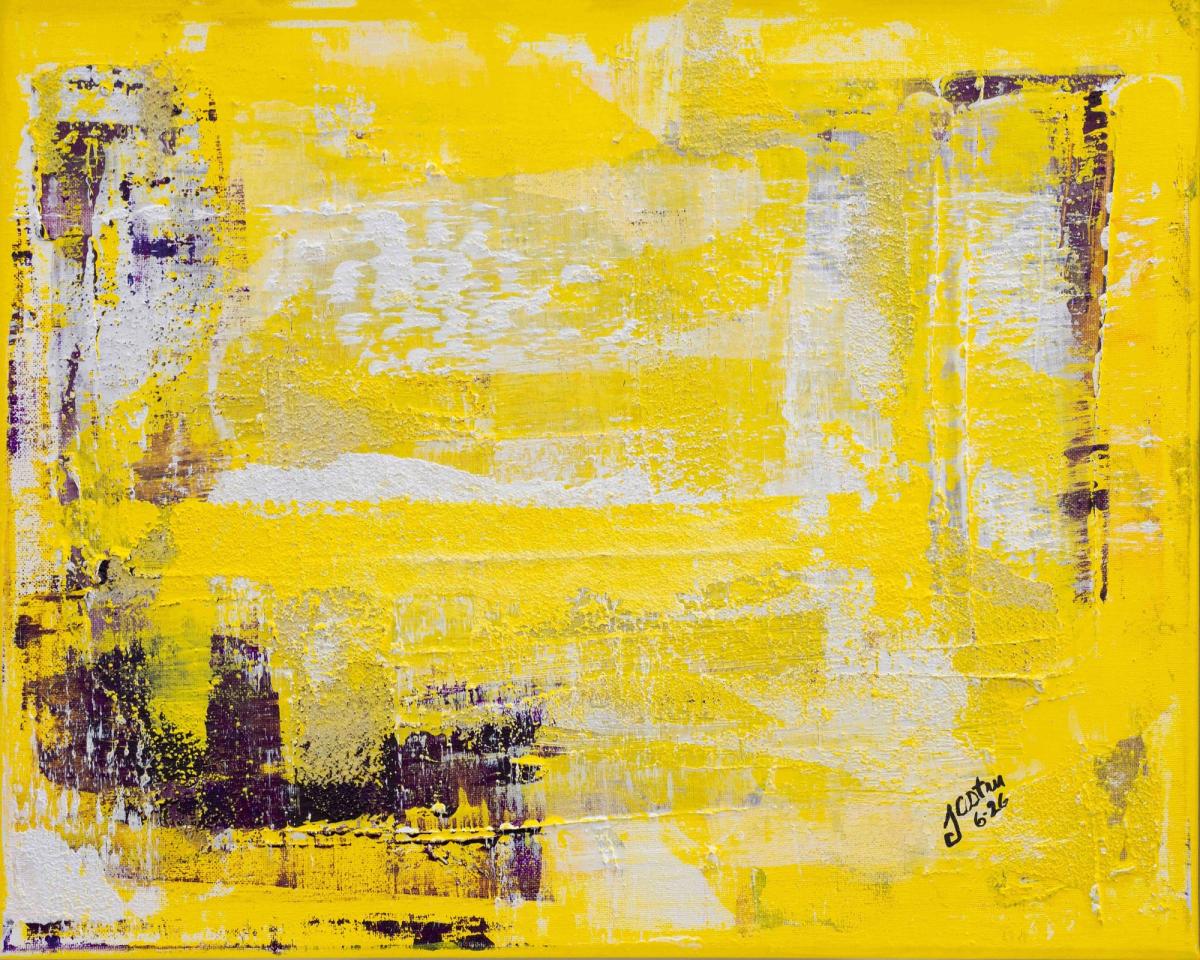
Creating Textured Flower Petals
Flowers are where impasto feels most natural to me. A petal is thin, but it is never flat. It cups, curls, catches light on one edge and falls into shadow on the other. Thick paint can do exactly that.
A few things make textured petals come alive:
- One stroke, one petal. A single loaded stroke of the knife or brush can shape a whole petal, thick at its base and thinning toward its edge.
- Follow the growth. Strokes that move the way a petal opens, outward from the center, read as natural. Strokes that fight that direction look stiff.
- Vary the pressure. Heavier pressure at the heart of the bloom, a lighter touch at the tips, gives each flower a sense of air around it.
- Leave the edges alone. Going back over a fresh petal flattens the ridge that was catching the light.
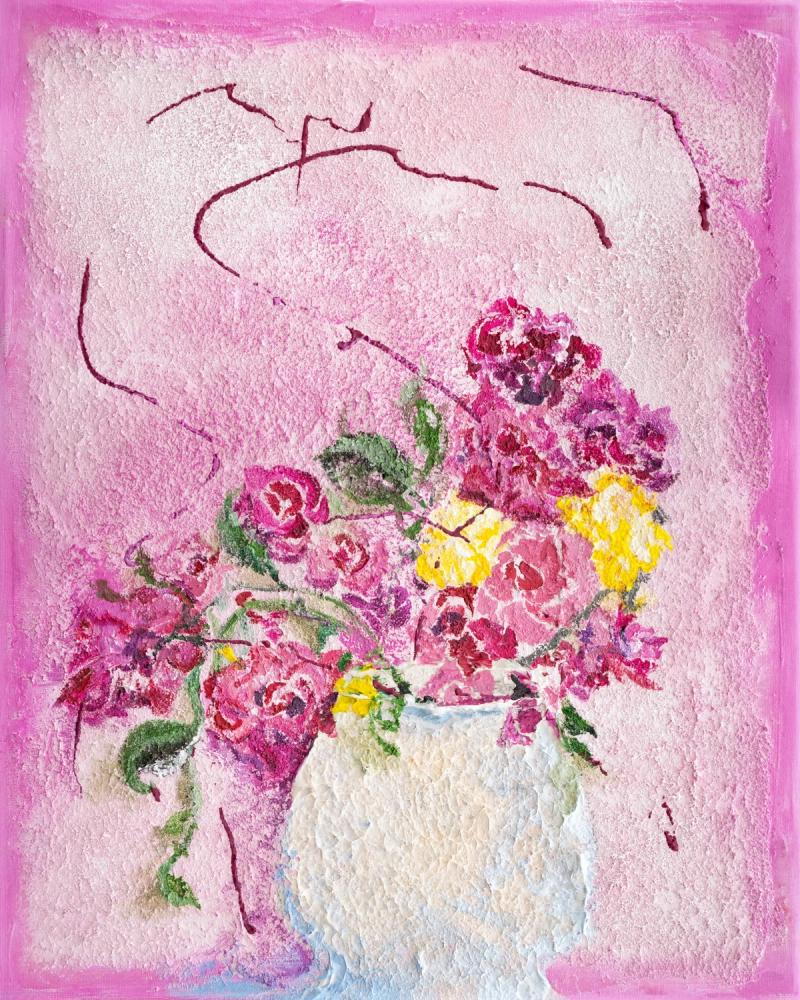
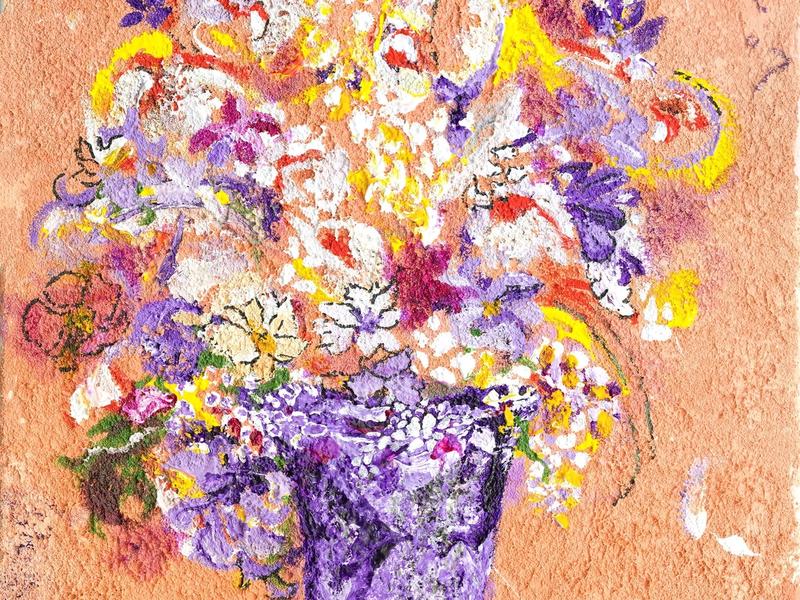
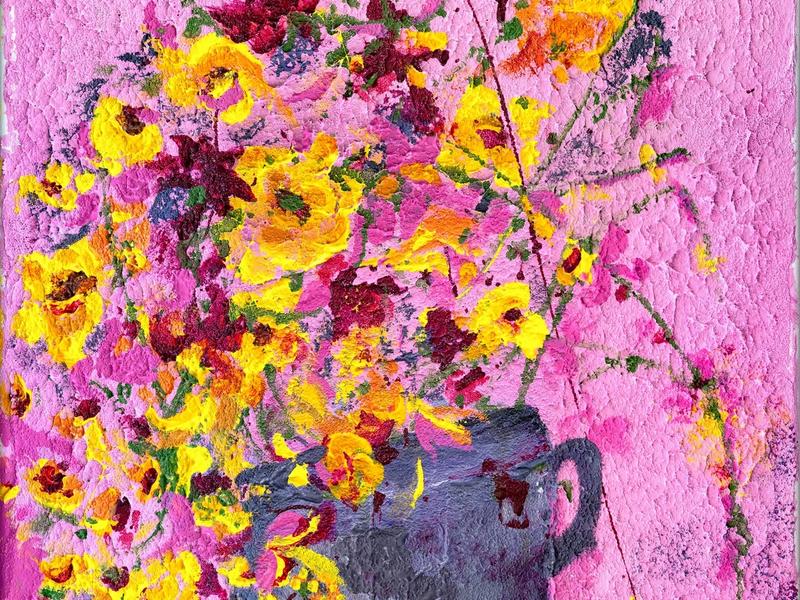
In A Vase Full of Dreams, pinks, magentas and sunny yellows spill from a creamy white vase against a textured rose ground, framed by a bright fuchsia border. Every petal is built up with heavy impasto brushstrokes, so the bouquet seems to lift right off the canvas.
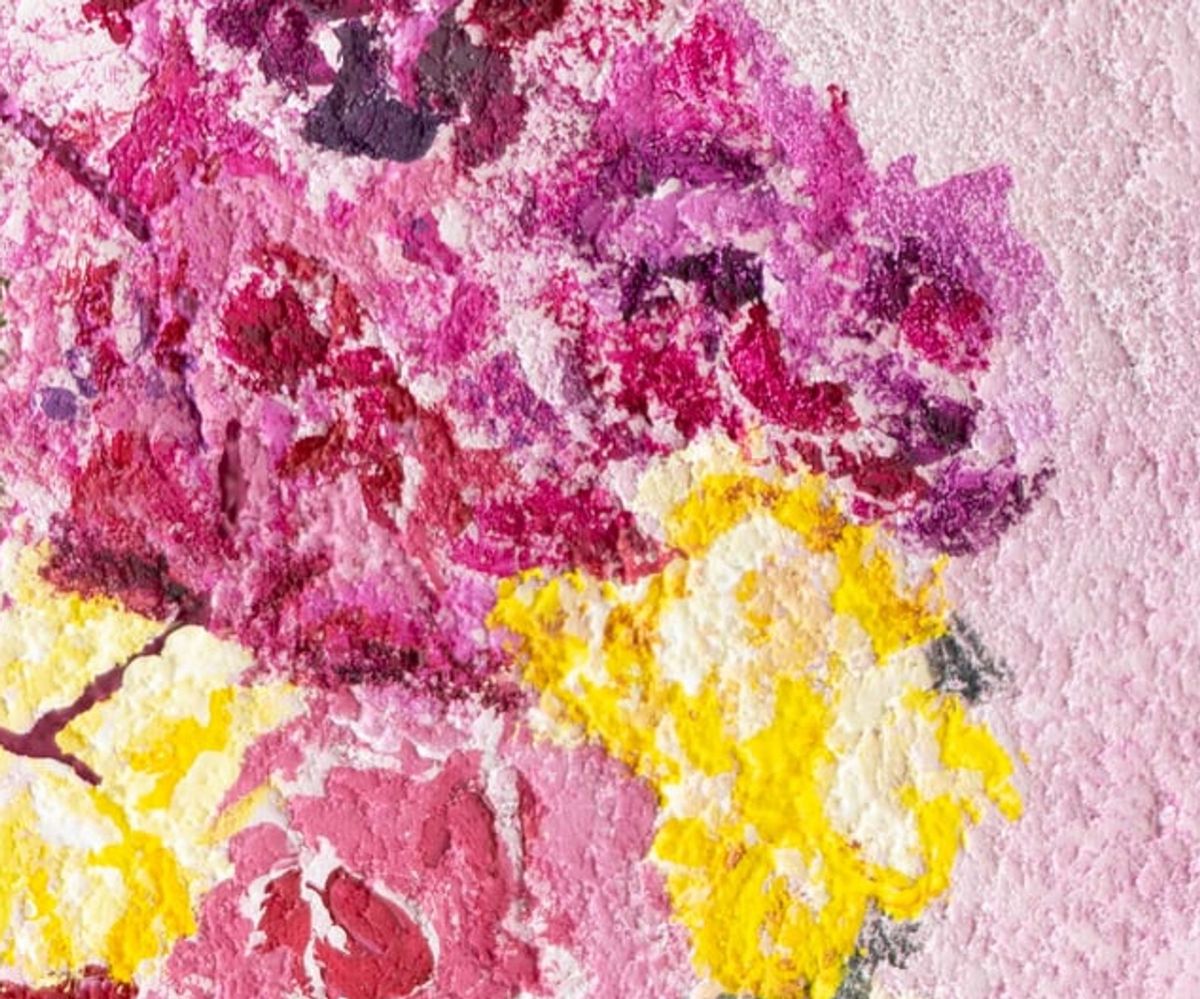
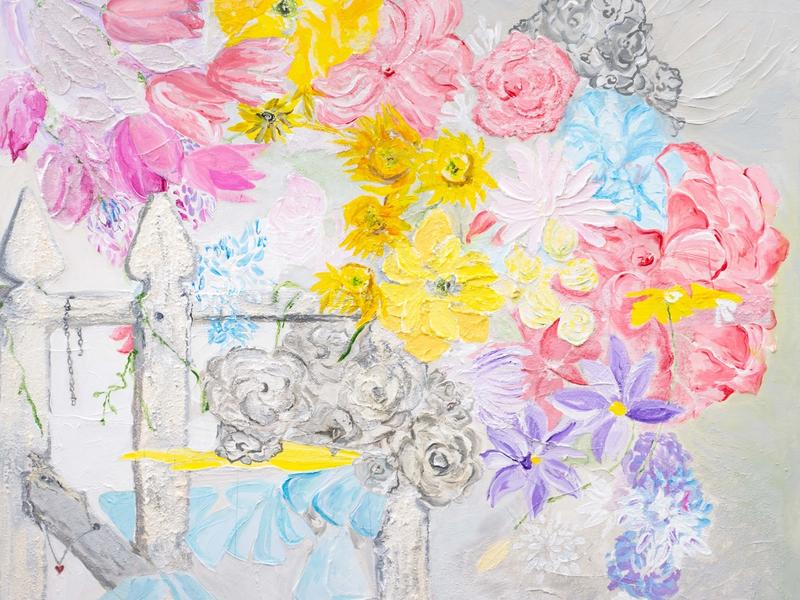
Dancing Into Spring takes the same idea toward movement. It captures the rhythmic, fluid energy of the season's first blooms, and heavy impasto gives it physical depth, so light plays across the textured surface to mimic petals moving in a spring breeze. It's painted on a gallery-wrapped canvas, and the continuous wrap lets the dance extend beyond the edge of the frame. That is what I mean by painting the air: not just the flower, but the breeze moving through it.
If you love florals with a lot of texture, the Where Flowers Dream collection has more textured blooms to explore.
Common Impasto Mistakes (and What They Teach)
Thick paint is generous, but it has a few habits worth understanding. These are the ones painters run into most often:
- Making everything thick. When every inch is heavy, nothing stands out. Impasto shines brightest next to calmer, thinner passages. Contrast is what makes a ridge sing.
- Overworking the stroke. Going back into wet paint again and again flattens the texture and can muddy the color. A confident stroke left alone usually says more.
- Piling on too much at once. Extremely thick wet layers can dry unevenly or crack. Building gradually, and following the paint maker's guidance on thickness and mediums, helps the surface stay sound. For questions about an older or valuable painting, a conservator is the right person to ask.
- Texture without direction. Random lumps read as noise. Strokes that follow the form or the movement of the subject read as feeling.
- Forgetting the light. Texture is only half the story; the light finishes it. Looking at a painting from the side, not just straight on, shows you what the ridges are really doing.
Seeing Impasto in Person, and in a Print
Photographs do their best, but impasto is hard to capture on a screen. A camera flattens what your eyes would read as depth, and it can't move around the painting the way you can. That's part of why I describe texture so carefully, and why a close look at the surface matters.
It's also why my hand-embellished giclée prints mean so much to me. Each begins as an archival reproduction of an original painting, and then I personally apply paint and texture to select areas. Every print carries real raised paint, and no two are exactly alike, so some of the dimension of the original canvas lives on in the piece you hold.
Come Closer to the Paint
If a painting here has caught your eye and you're curious about its texture, or you're imagining a piece with its own kind of air moving through it, I'd love to hear from you. You can use the "Inquire about a piece" button on any painting, or reach me through the contact page. Every commission begins with a conversation, and I'm always glad to talk about paint, light and the feeling you'd like a painting to carry.