Painting Flowers With a Palette Knife: How Texture Becomes a Petal

If you love floral paintings, you have probably stood close to one and wondered how a petal can look so soft from across the room and so sculpted up close. Very often the answer is a palette knife. In this post I want to walk you through palette knife flower painting the way I think about it in my studio: which knife shapes do what, how a single pressed stroke becomes a petal, how a stem can be pulled with the edge of a blade, and where a brush still earns its place. By the end, you will be able to stand in front of a textured floral and read it, mark by mark.
What a knife does that a brush cannot
A brush holds paint inside its bristles and lets it go gradually. As it moves, it leaves fine parallel grooves, softens edges and blends one color into the next. That is a wonderful thing, and I use brushes all the time.
A knife works differently. It carries paint on the surface of a flat steel blade and puts it down almost all at once. What it leaves behind is a smooth plane with a crisp edge, and at the place where the blade lifts away, a small raised ridge. With heavy-body acrylic, which is thick enough to hold its shape, those marks largely keep the form the knife gave them as they dry.
Now think about a real petal. It is a thin, curved plane that catches light on one side and falls into shadow on the other, with an edge that is sharper than the middle. A knife stroke is, quite literally, that same structure in paint. This is why texture can become a petal rather than just describe one. If you would like the bigger picture of why thick paint changes how a painting feels, I wrote about it in What Is Impasto Painting?
I paint what the air feels like.
That line guides everything I do, and with flowers it means the petals should feel as if they could move. A knife is one of the best tools I know for giving paint that sense of lift.
The knife shapes behind a petal
A quick note on names first. Strictly speaking, a palette knife is the straight, sturdy tool used for mixing paint, and a painting knife has a thinner, more flexible blade, usually with a bent (offset) handle. Most people, painters included, call both a palette knife, and I will too. Here is how the common shapes tend to be used for flowers:
- Pear or teardrop blades. The rounded belly of the blade is already shaped like a petal. Pressed down and pulled, it gives a full, cupped bloom.
- Long, narrow blades. Ideal for stems, slender leaves and fine lines, because the edge can lay down a thin, straight or gently curving ridge.
- Small pointed or diamond blades. For buds, flower centers, tiny flecks and the little accents that make a bouquet sparkle.
- Large trowel-shaped blades. For laying in broad areas, wide leaves, or scraping paint back to reveal what is underneath.
- Offset handles. The bend in the handle keeps your knuckles out of the wet paint, so you can work across the canvas without smudging what you have already built.
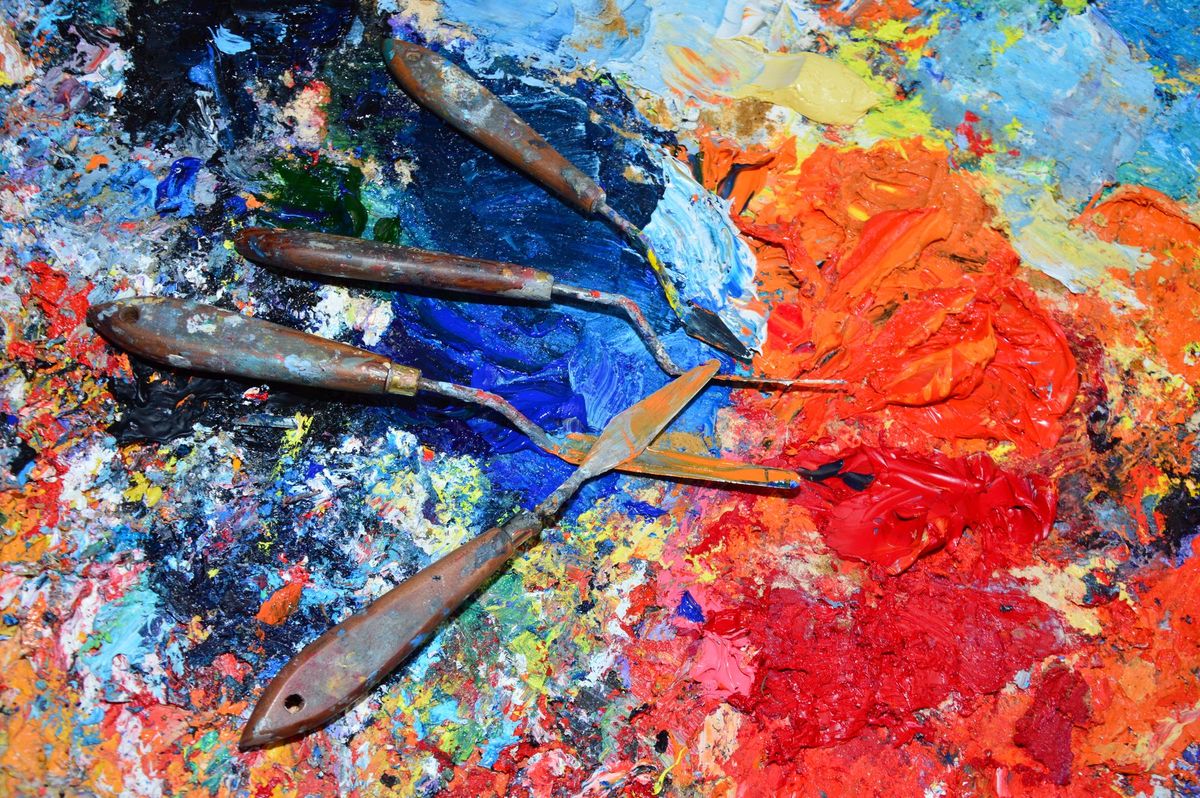
The flexibility of the blade matters as much as its shape. A springy blade responds to pressure: press harder and the paint spreads thin and almost translucent, ease off and it stays thick and sculptural. That one variable gives a petal its range, from a delicate edge to a heavy, light-catching curl.
How palette knife flower painting builds a petal
Press, pull, lift
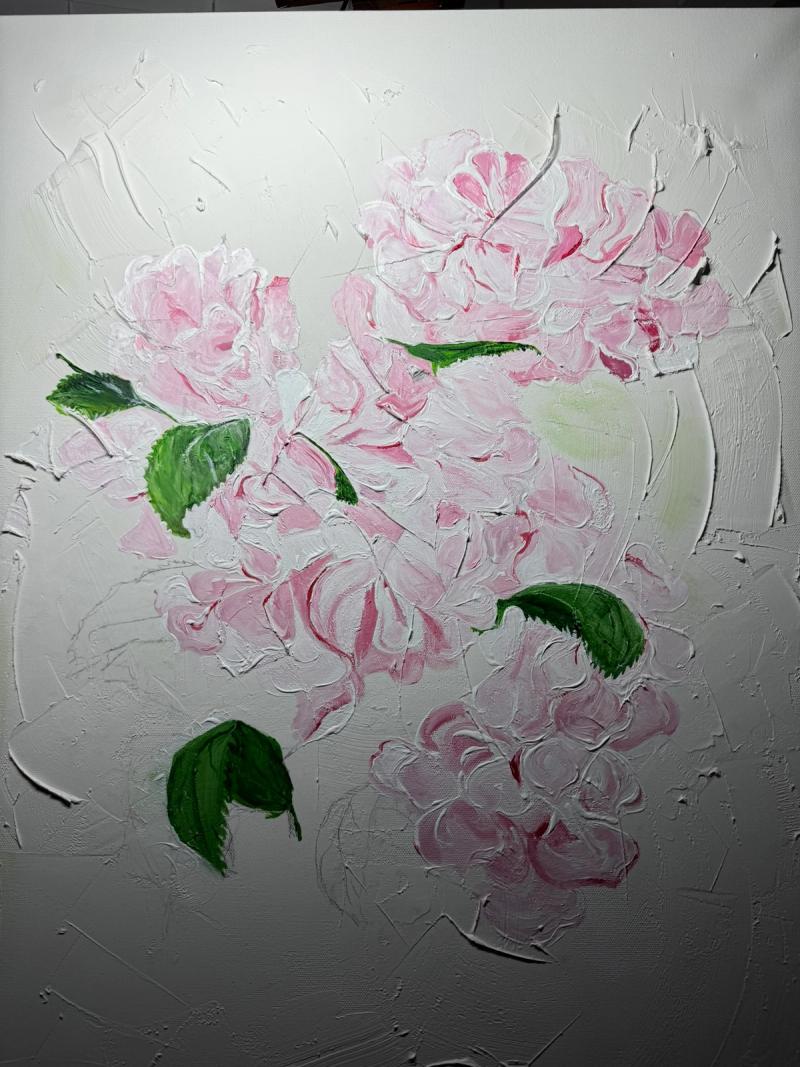
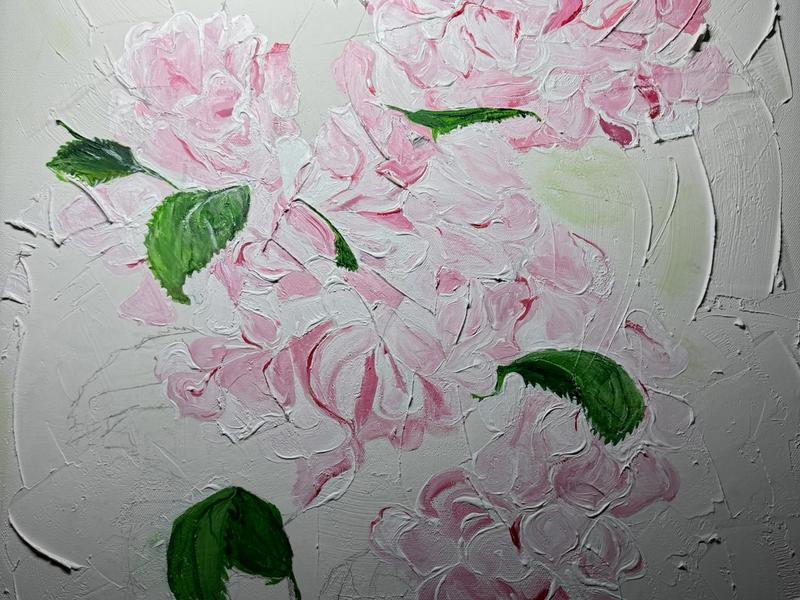
The basic petal stroke is surprisingly simple. Paint is loaded onto the underside of the blade, near the tip. The blade is set down where the outer edge of the petal will be, pressed so the paint spreads, then pulled toward the center of the flower and lifted. The lift is the important part: it leaves a ridge, or sometimes a soft curl, where the petal meets the heart of the bloom.
A small turn of the wrist during the pull will cup the petal, so it seems to bend toward or away from you. Flowers are usually built from the back petals forward, so each new stroke overlaps the last, the way real petals do.
Two colors on one blade
One of my favorite things about a knife is that it can carry two colors at once without mixing them into mud. Pick up a little of each, lay them down in one stroke, and they streak side by side: a deeper tone at the base, a lighter one at the edge. Real petals are rarely one flat color, and this gives you that variation in a single gesture. The catch is that knife marks lose their freshness when you go back into them, so each stroke has to be confident and then left alone.
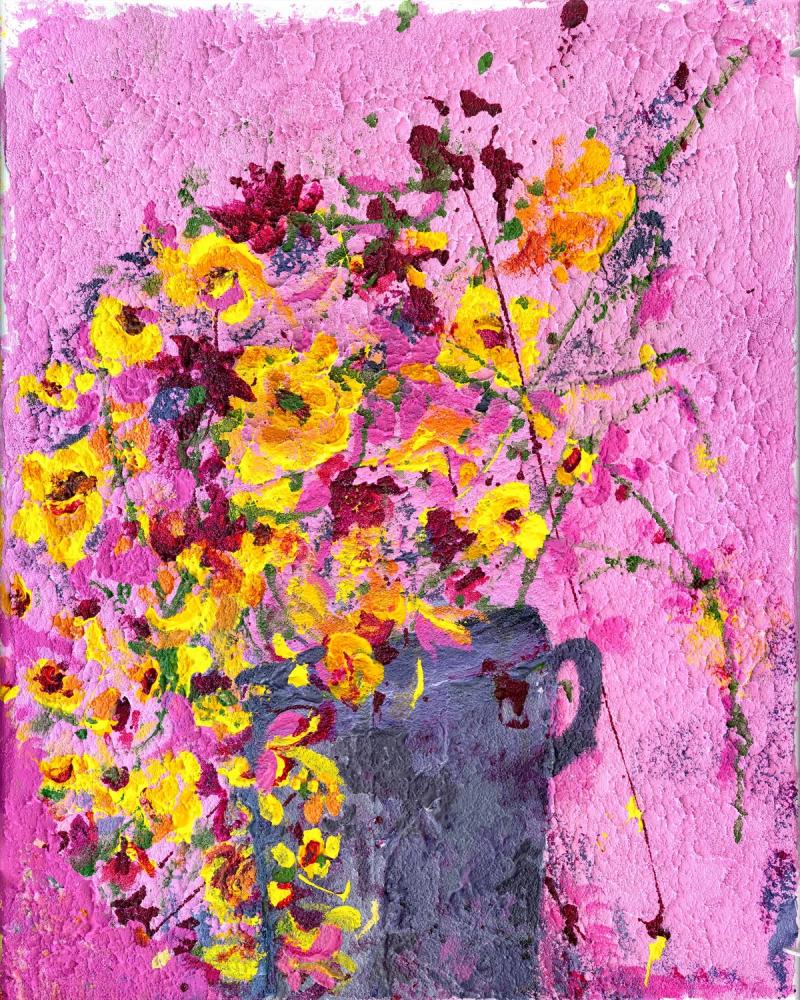
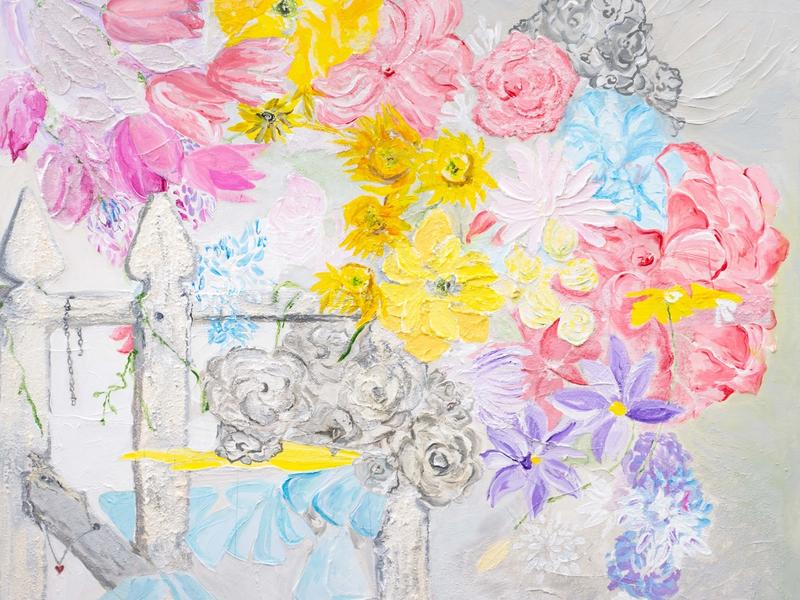
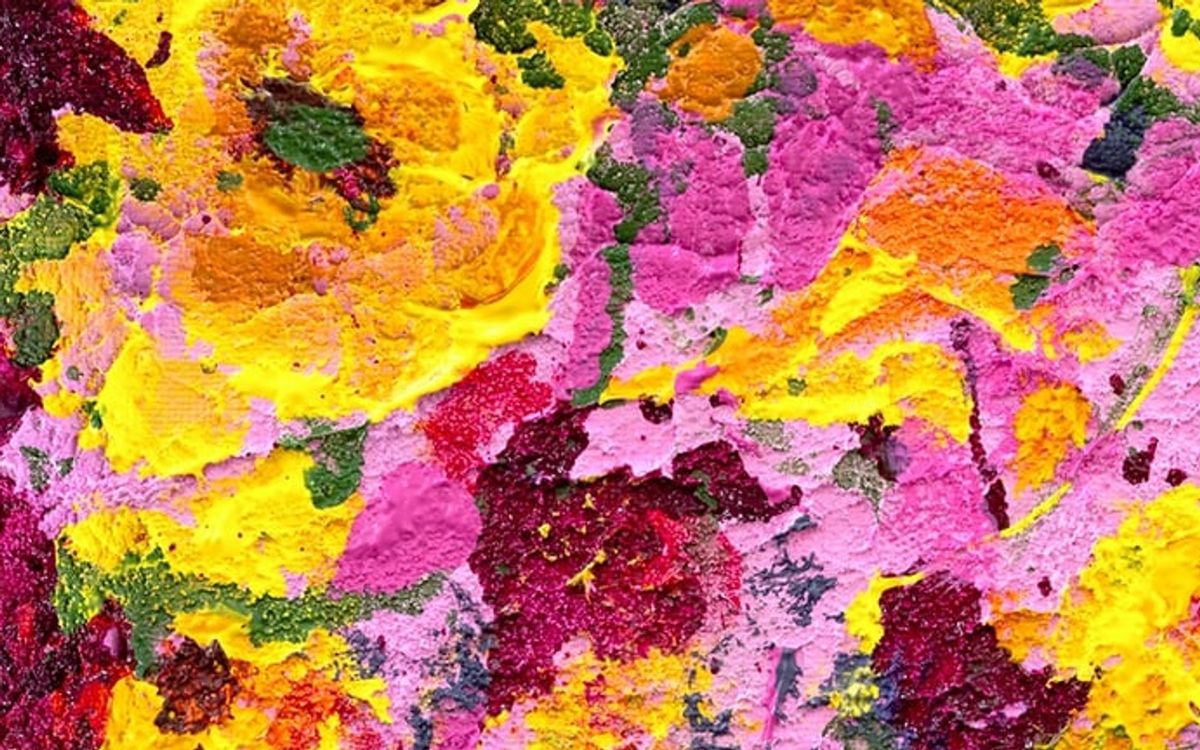
You can see built-up petals in A Burst of Happy, where sunny yellows and deep magentas tumble over a hot-pink ground in heavy impasto strokes. The petals are not drawn so much as built, and the texture catches the light so the whole bouquet reads as pure, unfiltered happiness.
Making flowers move
Movement in a floral comes largely from direction. Every knife stroke has a beginning, a direction of travel and a lifted end, and the eye follows it. When petals are pulled in a similar sweep, the whole flower seems to lean, as if the air around it were moving.
Light does the rest. Because the ridges are real and raised, they throw small shadows, and those shadows shift as the light in a room changes through the day. In Dancing Into Spring, heavy impasto creates physical depth, and the light playing across the textured surface mimics the movement of petals in a spring breeze. The continuous gallery wrap lets that dance carry on past the edge of the frame.
How to paint stems with a palette knife
Stems are where many people are surprised by what a knife can do. The usual approach is to load a thin bead of paint along the edge of a long, narrow blade (one way is to scoop up a little paint and scrape the flat of the blade clean, so only a fine line sits on the edge). The edge is then touched to the canvas and drawn in one continuous motion.
A few things shape the result:
- Direction. Pulling from the bloom down toward the vase feels different from pushing up from the base. The stroke tends to be heavier where it starts.
- The arc. A curved stem comes from moving the whole arm in an arc rather than bending the wrist, which keeps the line smooth.
- Rolling the blade. Tilting the edge slightly as it travels makes the stem thicken and thin, the way a real stem tapers.
- Leaves. A leaf is often the flat of the blade pressed against the stem and twisted off, leaving a sharp tip.
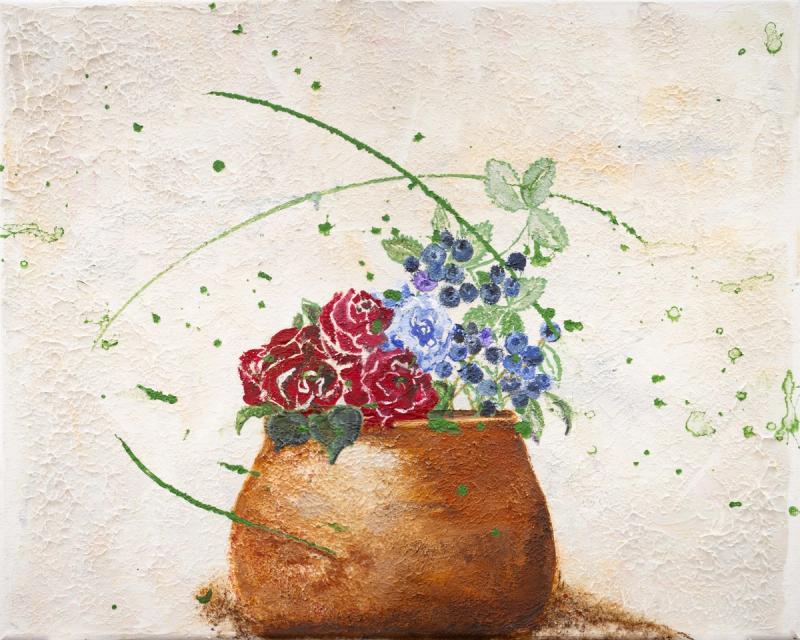
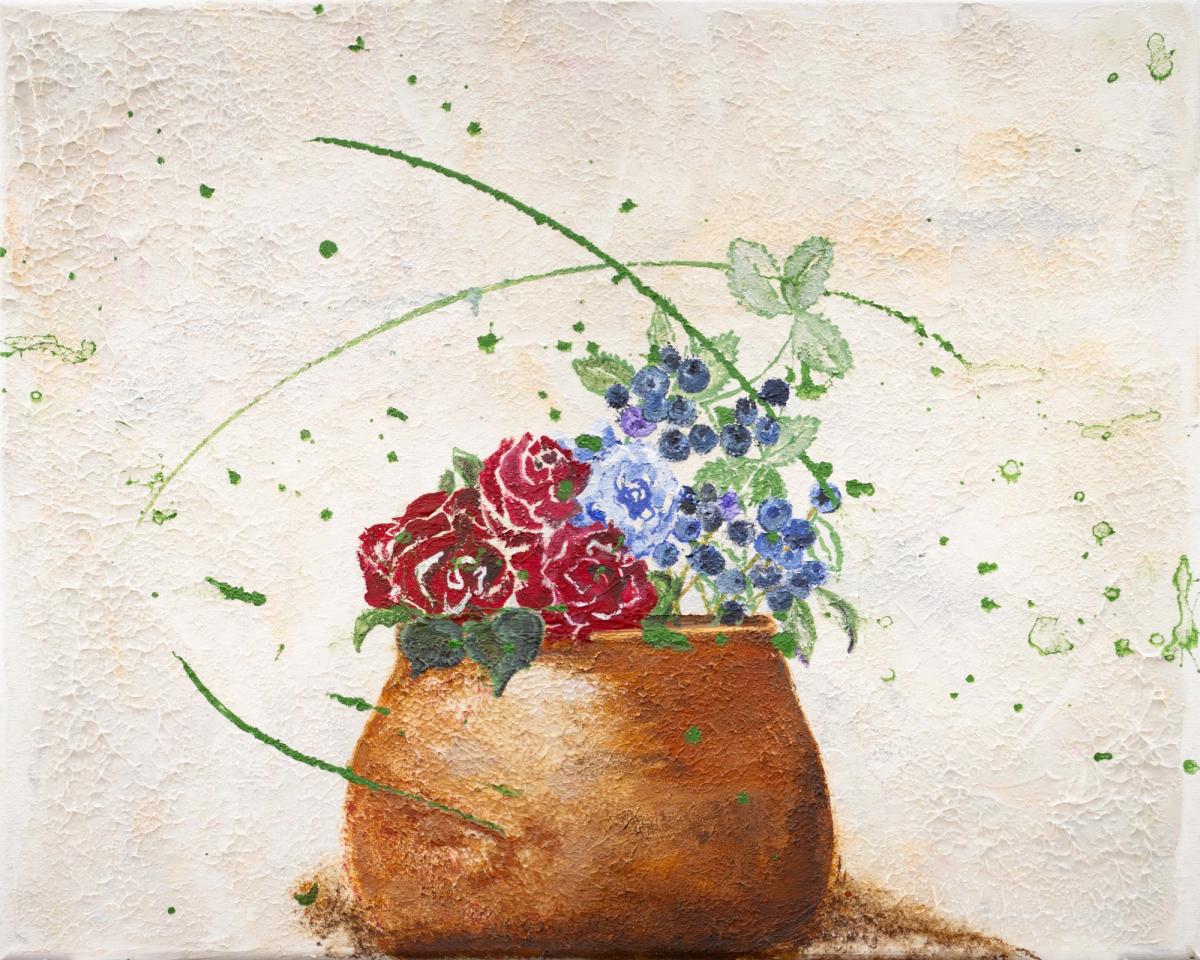
A stem tells you where the weight of a flower is and how it is holding itself up, so it carries more feeling than you might expect. In Keeper of the Garden, sweeping green stems and flecks of paint arc across a crackled cream ground, carrying the fresh, unruly life of the garden right up to the edge of the canvas. Those arcs are what make the crimson blooms and the little cluster of blueberries feel as if they are spilling upward.
Where the brush comes back in
I work with both palette knives and brushes, and in a floral they have different jobs. The brush is wonderful for soft grounds, hazy atmosphere, fine lines and quick flicks of paint. The knife is wonderful for anything that should sit forward and catch the light: petals, the rim of a vase, a heavy bloom.
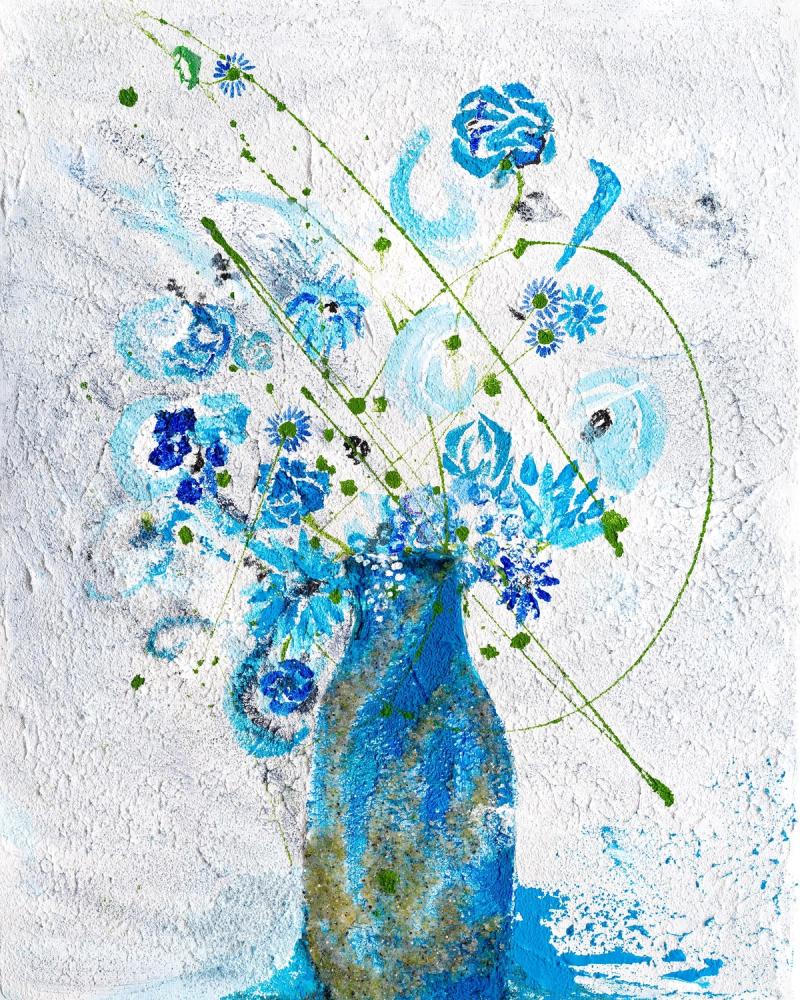
Put together, they create depth. Softer, brushed areas tend to recede, while sculpted knife work comes forward, so a bouquet can feel like it is standing in real air. In Blue Daydream, cornflower blues and soft aquas bloom from a textured blue vase, while fine green stems and flicks of paint lift the composition into the air, all set on a bright, textured white ground. That mix of fine, airy marks and textured surfaces is what gives it its calm, unhurried feeling.
A practical note: thick layers of heavy-body acrylic take longer to dry through than thin ones, even when the surface feels dry. If you paint this way yourself, follow your paint maker's guidance on drying and layering.
How to read a knife-painted flower
The next time you stand in front of a textured floral, try this:
- Step to the side. Looking across the surface at an angle shows you the ridges far better than looking straight on.
- Look for flat planes with crisp edges. That is usually a knife. Fine, parallel grooves inside a stroke usually mean a brush.
- Find where each stroke ends. A small raised lip or curl shows where the blade lifted, and tells you which way the stroke traveled.
- Notice the streaks. Two colors sitting side by side within one petal, unblended, are often the mark of a loaded knife.
- Come back at another time of day. The same petals will look different as the light moves.
This is also why, when I hand-embellish a giclee print, I apply real paint and texture by hand. A flower needs something raised for the light to find.
An invitation into the studio
If a petal in one of my paintings has caught your eye, or you are curious about how a particular bloom was built, I would love to hear from you. You can explore the Where Flowers Dream collection, ask about any piece using the inquiry button on its page, or write to me through the contact page. And if you have a flower, a color or a feeling you would like to live with, we can talk about a commission. Every one begins with a conversation.