Heavy-Body Acrylics: The Paint Behind Sculptural Brushstrokes
If you've ever stood close to a textured painting and wanted to run a finger along a ridge of paint (please don't, but I understand the urge), you've already met the quality this post is about. A brushstroke that stands up off the canvas and stays there doesn't happen by accident. It starts with the paint itself. In heavy-body acrylic painting, the paint is thick enough to hold the exact shape the brush or knife leaves behind. By the end of this post you'll know what heavy-body acrylic actually is, how it differs from soft-body and fluid acrylics, how painters keep their strokes crisp through many layers, and why it's the paint I reach for when I want a painting to be felt as much as seen.
What makes a paint "heavy body"
All acrylic paint shares the same basic ingredients: pigment for color, and an acrylic polymer emulsion that binds the pigment and dries into a flexible film. What changes from one type to another is mostly viscosity, which simply means how thick or runny the paint is.
Heavy-body acrylic sits at the thick end. Squeeze it from the tube and it comes out like soft butter or a stiff frosting. It doesn't slump or spread on its own. Pull a brush through it and the bristle marks remain. Press a palette knife into it and lift away, and you get a little peak that stays put. That stiffness comes from how the paint is formulated, and heavy-body lines are often made with a generous amount of pigment, which is part of why the colors can feel so dense and rich straight from the tube.
That body is the whole point. The paint has its own structure, so the mark you make is the mark that dries.
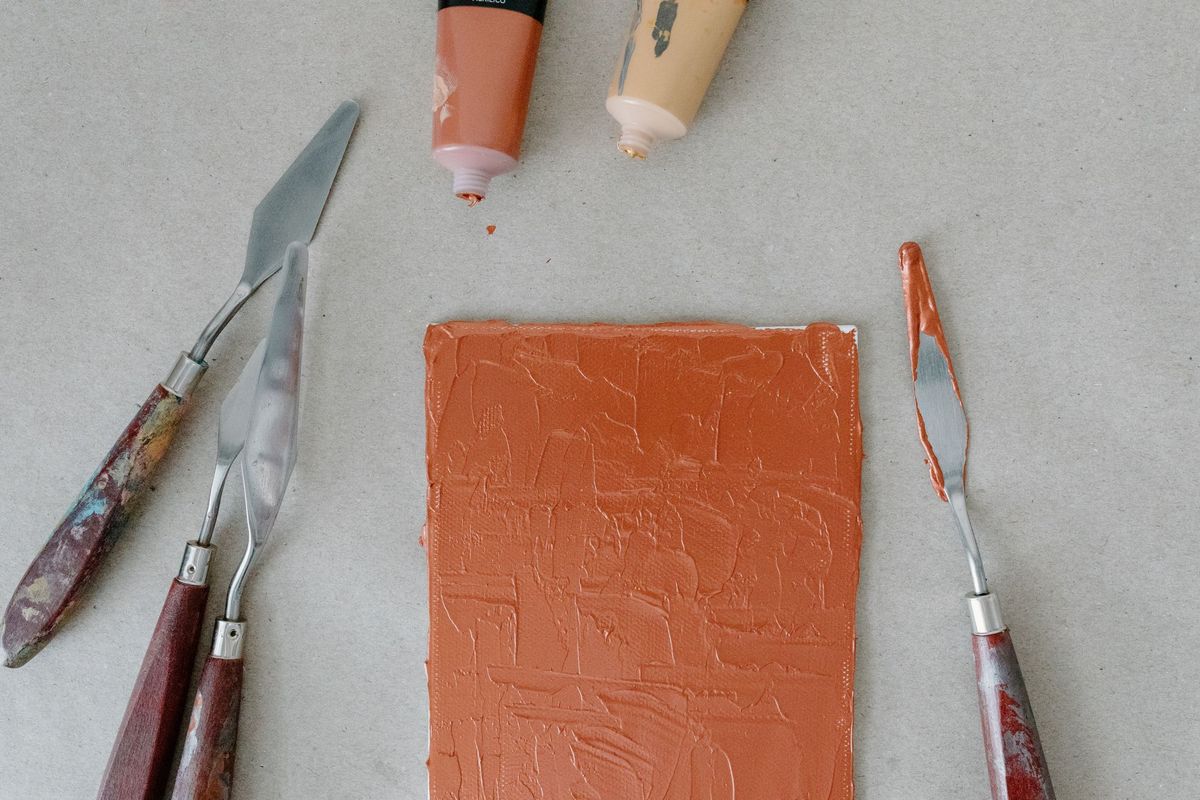
Heavy-body, soft-body and fluid acrylics, side by side
It helps to picture the three main consistencies together, because each one is built for a different job.
- Heavy-body acrylics are thick and buttery. They hold brush marks, knife edges and peaks. They're made for impasto, texture and expressive, visible strokes.
- Soft-body acrylics are creamy, closer to yogurt or heavy cream. They still have some substance, but they relax and level out a little after you apply them, so brush marks soften. They're lovely for smooth blending, fine detail and even coverage over large areas.
- Fluid acrylics are pourable, about the consistency of ink or thin cream. They flow and self-level, which makes them ideal for washes, glazes, staining, pouring techniques and fine line work.
None of these is "better." A painter who wants a glassy, seamless gradient would be fighting heavy-body paint the whole way. A painter who wants a petal to curl up off the surface would be fighting fluid paint. The real question is always what you want the surface to do.
Many artists keep more than one consistency on hand, and there are also mediums that bridge the gap. Gel mediums and modeling pastes add body and bulk, while flow mediums and water thin paint down. If you're curious about a particular product, the paint maker's own technical information is the best guide to how it behaves and how it should be mixed.
How heavy-body acrylic painting holds a stroke
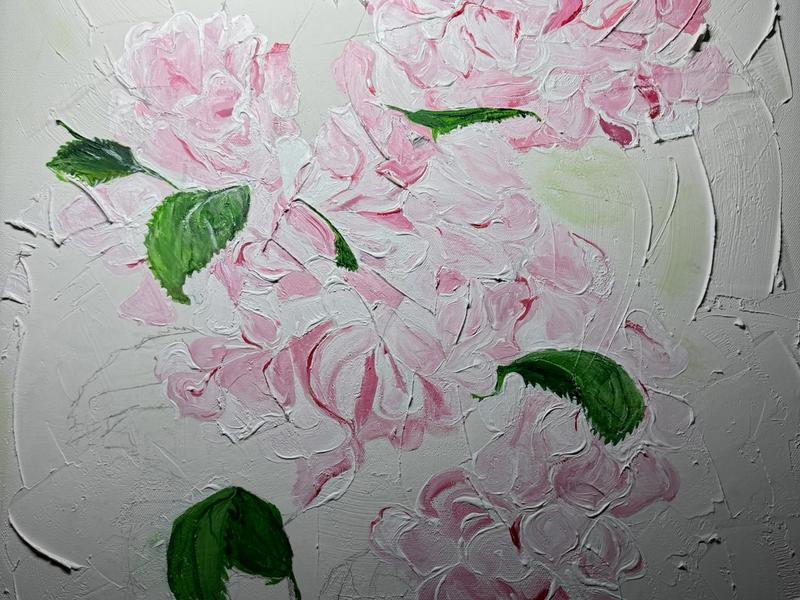
Here's what is happening at the surface. Acrylic dries as the water in it evaporates and the tiny polymer particles fuse into a film. With thin paint, that film is flat and smooth. With heavy-body paint, there is enough material, and enough stiffness, that the shape of your gesture is held as it dries: the grooves left by individual bristles, the raised lip where a knife stopped, the swirl of a turning wrist.
Two general things are worth knowing, whether you paint or simply love looking:
- Acrylic usually dries a little darker. The binder looks milky when wet and turns clear as it dries, so colors often deepen slightly. Painters who work thickly learn to anticipate this.
- Thick paint takes longer to dry all the way through. A surface can feel dry to the touch while the inside of a heavy ridge is still curing. How long that takes depends on thickness, humidity and the paint itself, so it's best to follow the manufacturer's guidance.
Once a heavy-body surface has fully cured, those ridges become part of how the painting meets light. As light moves through a room over the day, every raised edge casts a small shadow and every valley holds a little pocket of color, so the painting looks slightly different from each angle and at each hour. I wrote more about that quality in What Is Impasto Painting? Why Thick Paint Changes How Art Feels.
Keeping brushstrokes visible
If you paint yourself, or you're simply curious how a lively surface comes together, these are the general principles:
- Use the paint with little or no water. Water thins acrylic and relaxes the stroke. Heavy-body paint straight from the tube, or extended with a gel medium rather than water, keeps its peaks.
- Choose tools that leave a mark. Stiff bristle brushes leave grooves. Palette knives leave clean, sculpted planes and sharp edges. Very soft brushes tend to smooth paint out.
- Load generously and commit. A full brush or knife, laid down with intention, leaves a confident stroke. Going back over the same spot again and again flattens it and can muddy the color.
- Don't over-blend. Let neighboring colors meet and touch rather than stirring them together on the canvas. Those seams are part of the energy.
- Let a passage firm up before working over it. Pushing thick paint into wet thick paint tends to drag both layers around. Giving the layer below some time keeps each stroke distinct.
Layering thick paint without losing its life
Texture rarely arrives in a single pass. Most impasto surfaces are built in stages: a ground and broad areas of color first, then the more sculptural strokes on top, where they'll catch the most light. Thinner passages underneath and thicker ones above is a sensible general approach, and letting some of the lower layers show through gives the eye somewhere to rest between the ridges.
It's also wise not to pile an enormous mass of paint on all at once. Very heavy single applications can take a long time to cure and may be more prone to cracking, while building up gradually, with drying time between layers, is gentler on the paint film. Paint makers publish guidance on this, and if you have questions about caring for a particular textured painting, a conservator is the right person to ask.
Why I chose heavy-body paint for my own work
I paint what the air feels like. For me that means texture, emotion and movement matter more than a flat, literal picture of a subject. I want you to sense a breeze moving through petals, or the energy of a bouquet that can't quite sit still, and heavy-body acrylic lets me put that feeling into the surface itself.
Soft-body and fluid paints can be beautiful, but they settle. Heavy-body paint stays where I put it. When I work with palette knives and brushes, every ridge and swirl records a gesture, and the paint keeps that movement long after it dries. That's what I mean when I say I want my paintings to be experienced, not simply viewed.
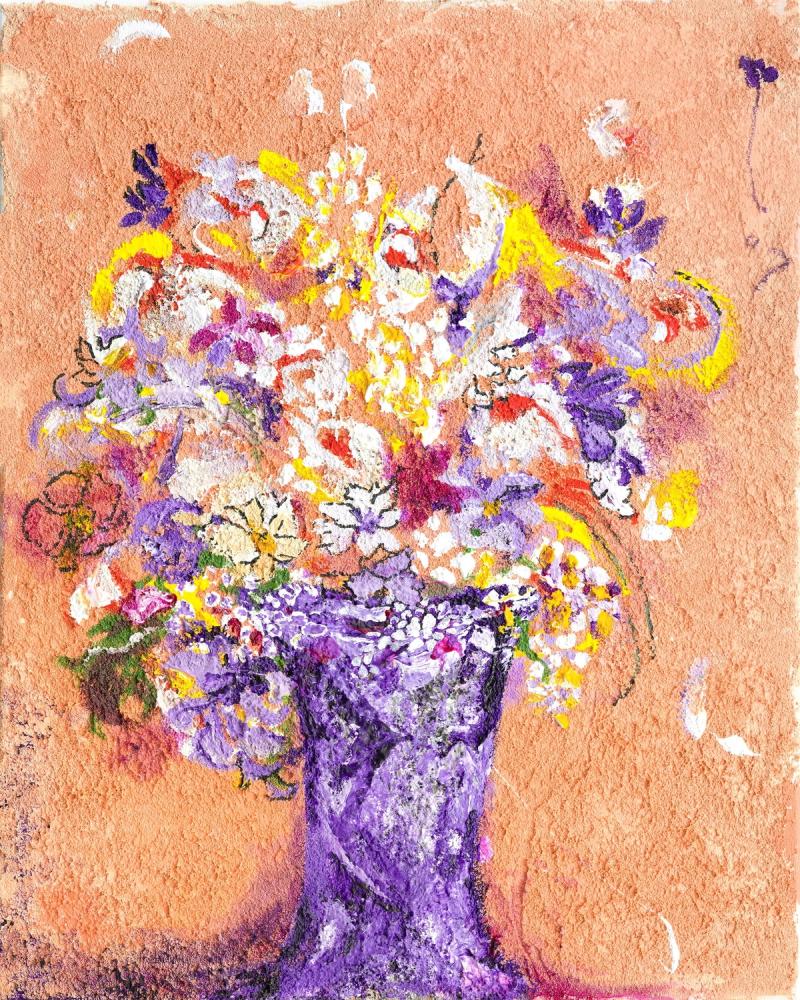
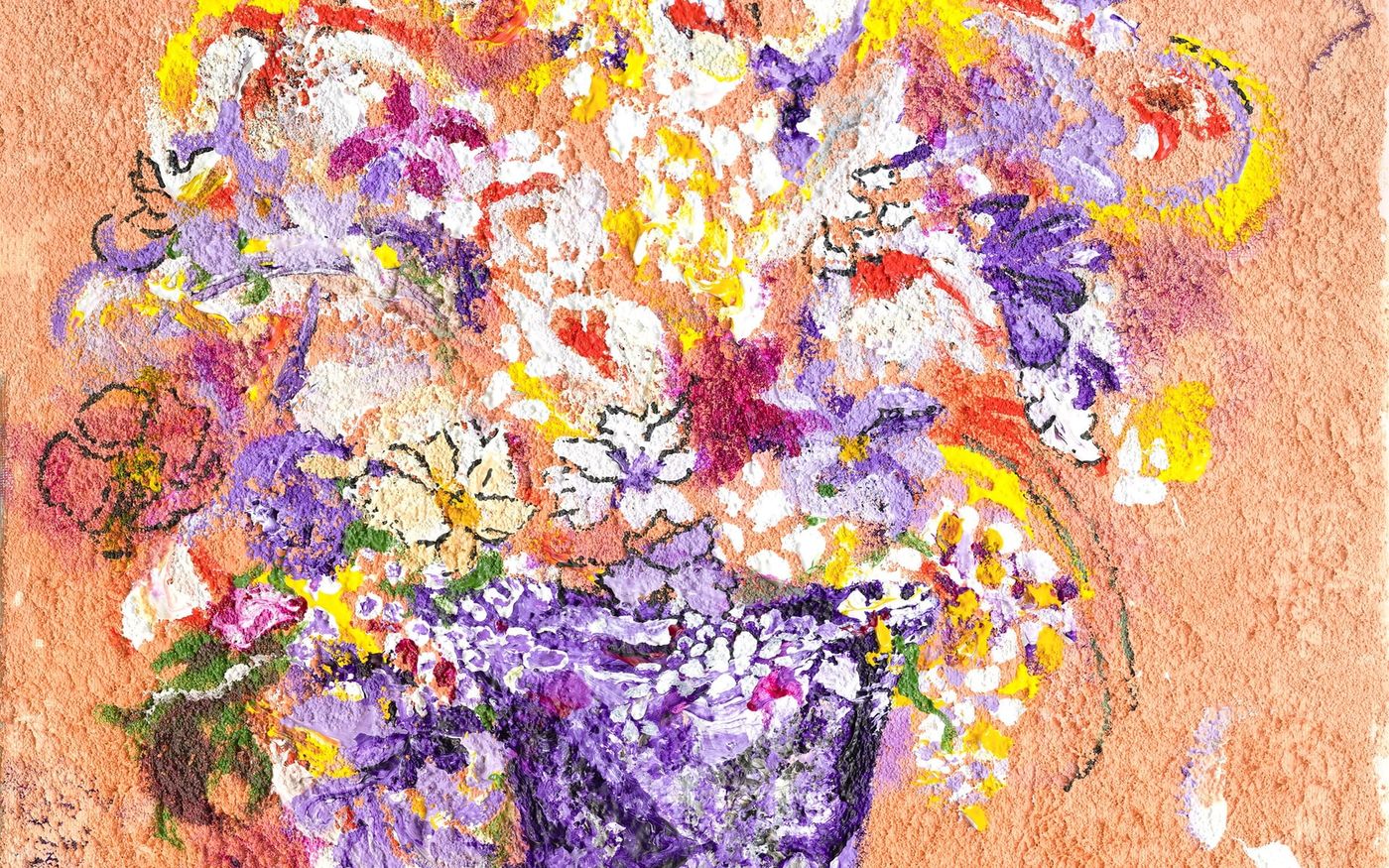
You can see this clearly in A Colorful Affair. Violets, lilacs, golds and whites spill from a purple vase against a warm peach ground, and small and large paint strokes build up a full-bodied texture. Because the paint holds every one of those strokes, the arrangement feels as playful up close as it does from across the room.
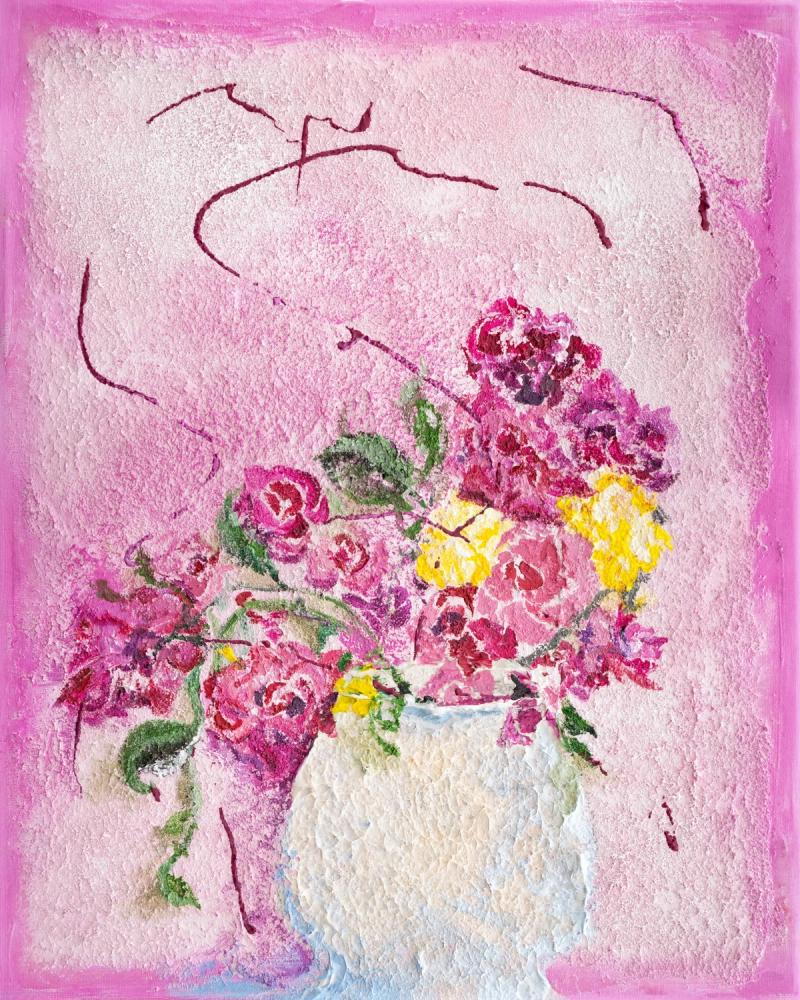
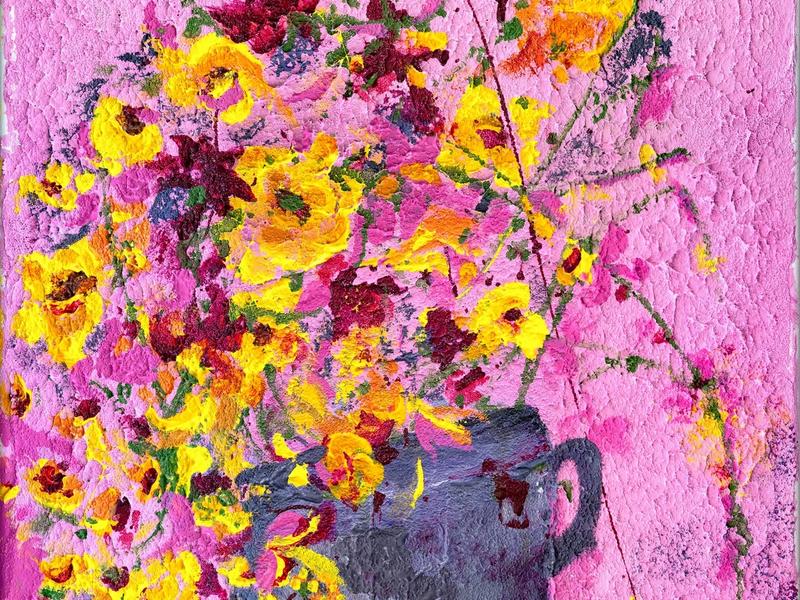
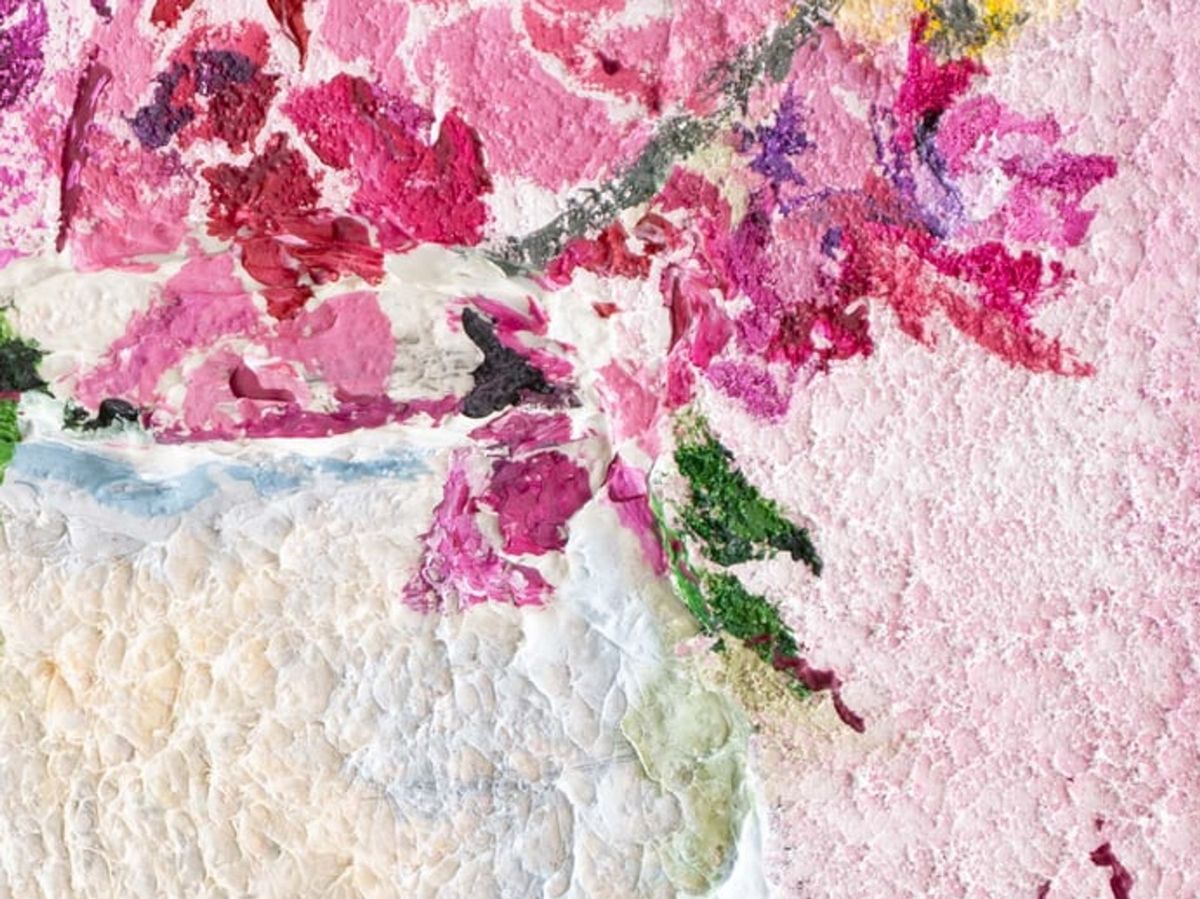
A Vase Full of Dreams takes the thickness further. Pinks, magentas and sunny yellows spill from a creamy white vase against a textured rose ground, framed by a bright fuchsia border. Every petal is built up in heavy impasto brushstrokes, so the bouquet seems to lift right off the canvas.
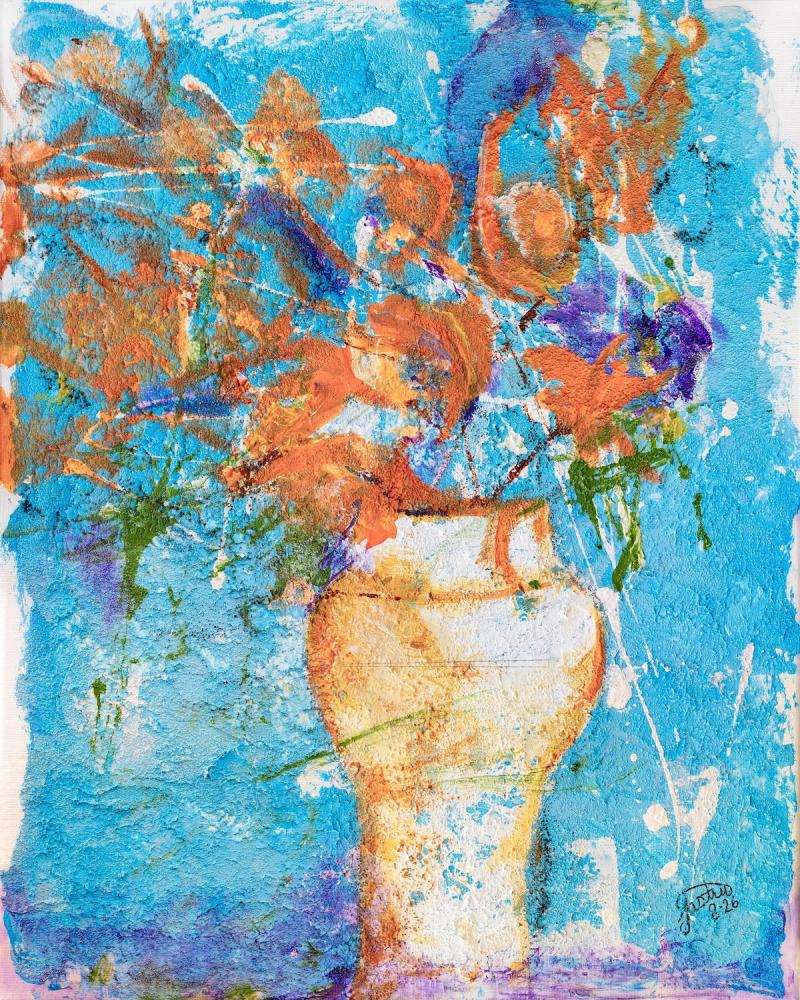
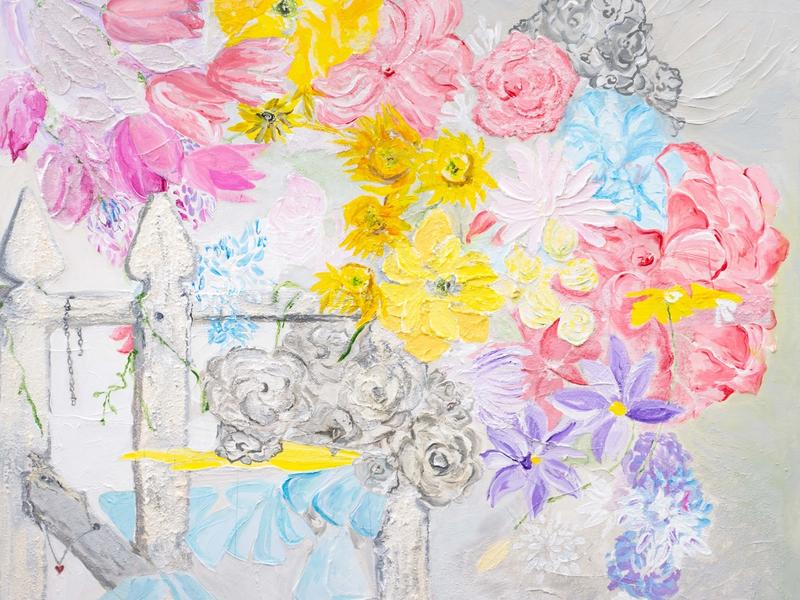
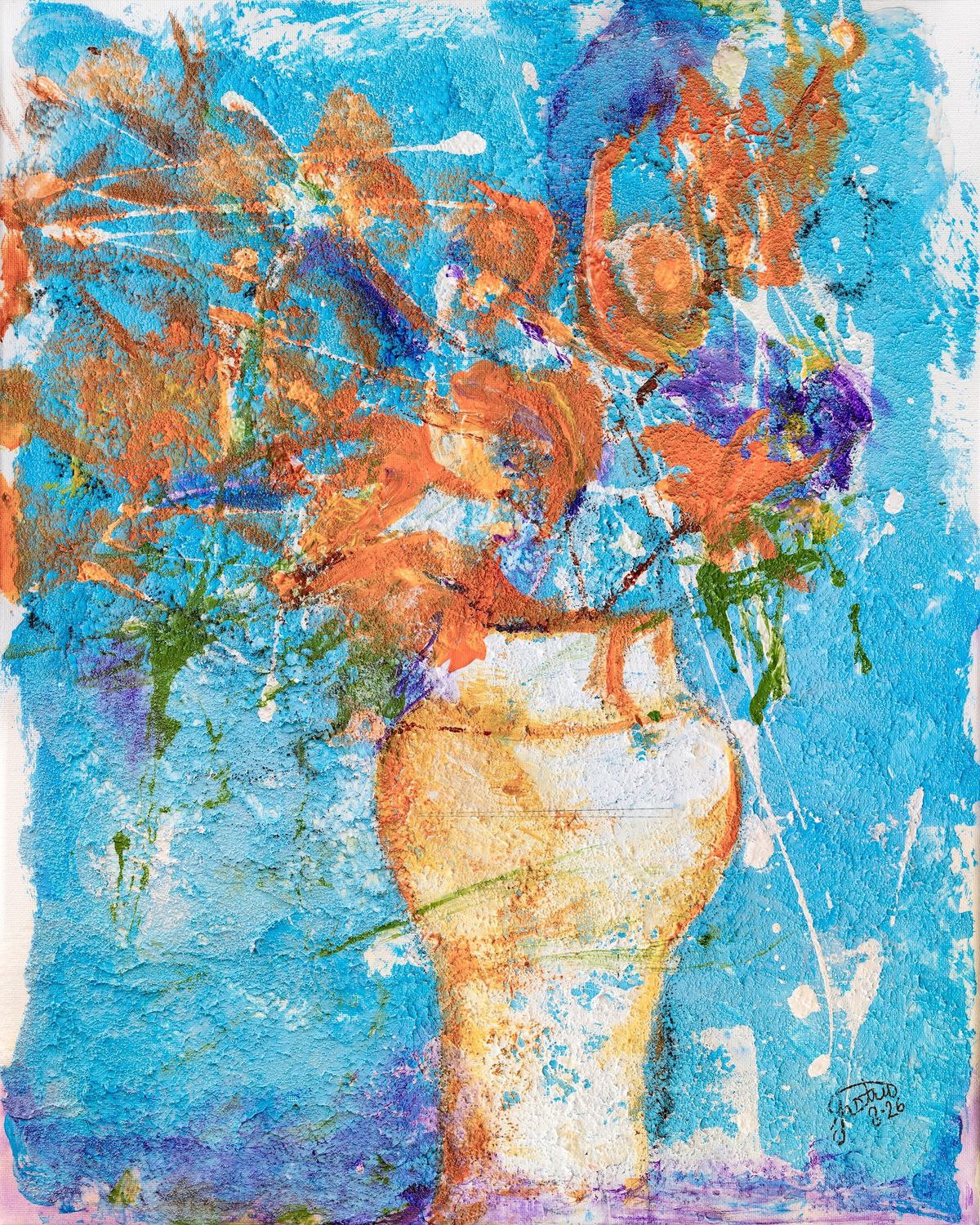
In Chasing the Blue, the surface is all about motion. Flamboyant, swirling strokes of tangerine and rust spill across a sky-blue ground, as if the colors themselves were racing to find their way into the vase. The brushwork is loose and energetic, and because the strokes stay visible, the bouquet never feels settled. It always seems about to move again.
That same love of raised paint carries into my hand-embellished giclée prints. I apply texture and paint to each one by hand, so every print carries real raised paint and no two are exactly alike.
Coming closer to the surface
Photographs tend to flatten texture, even good ones, and so much of what heavy-body paint does lives in the light moving across its ridges. If one of these paintings has caught your eye and you'd like to know more about it, or you're imagining a commissioned piece with its own sculptural surface, I'd love to hear from you. You can use the "Inquire about a piece" button on any painting or reach me through the contact page. Every commission begins with a conversation, and I'm always glad to talk about paint.