What to Look for When Buying an Original Painting
You have found a painting you keep coming back to, on a screen or in a room, and now the quieter questions arrive. Is it well made? Will it hold up? Will I still feel this way in five years? If you are wondering what to look for when buying a painting, especially your first original, this is the checklist I would hand you from my side of the easel. You will come away knowing how to read a surface up close, what the edges and finish quietly tell you, how to think about size and medium, and why the person behind the work matters as much as the work itself.
Start with how it makes you feel, then give it time
Every good choice begins with a feeling, but the feeling worth trusting is the one that lasts. A painting can grab you in a second and bore you in a month. Another can seem quiet at first and keep opening up for years.
A few honest tests:
- Do you go back to it? If you have closed the page and reopened it three times, that matters more than any rule.
- Does it hold more than one mood? The paintings people live with longest tend to feel a little different in the morning than at night.
- Is there something you only noticed later? A detail, a color, a mark that rewards a second look is a sign the painting will keep giving.
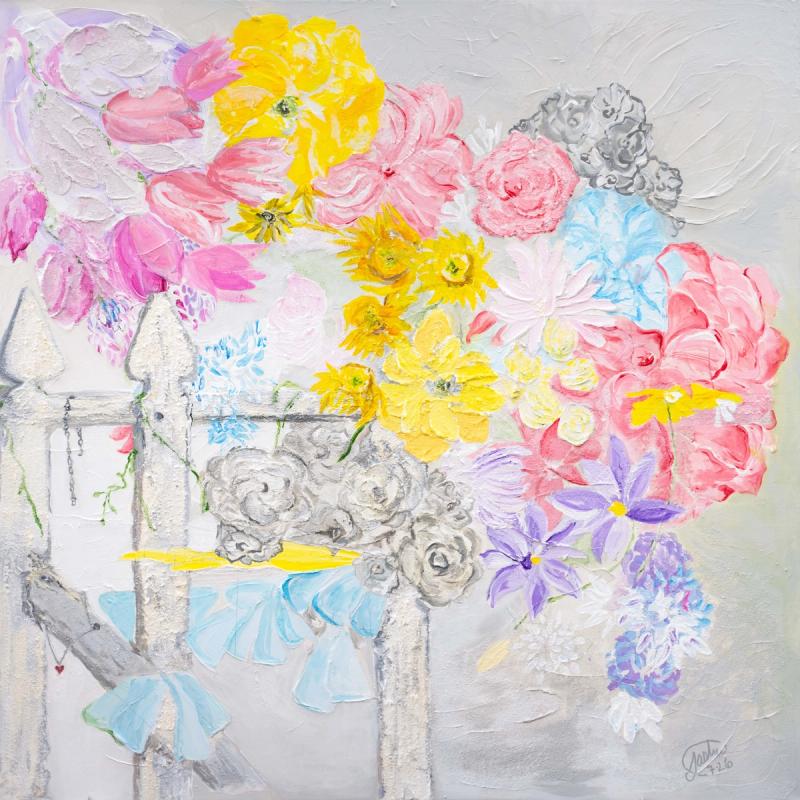
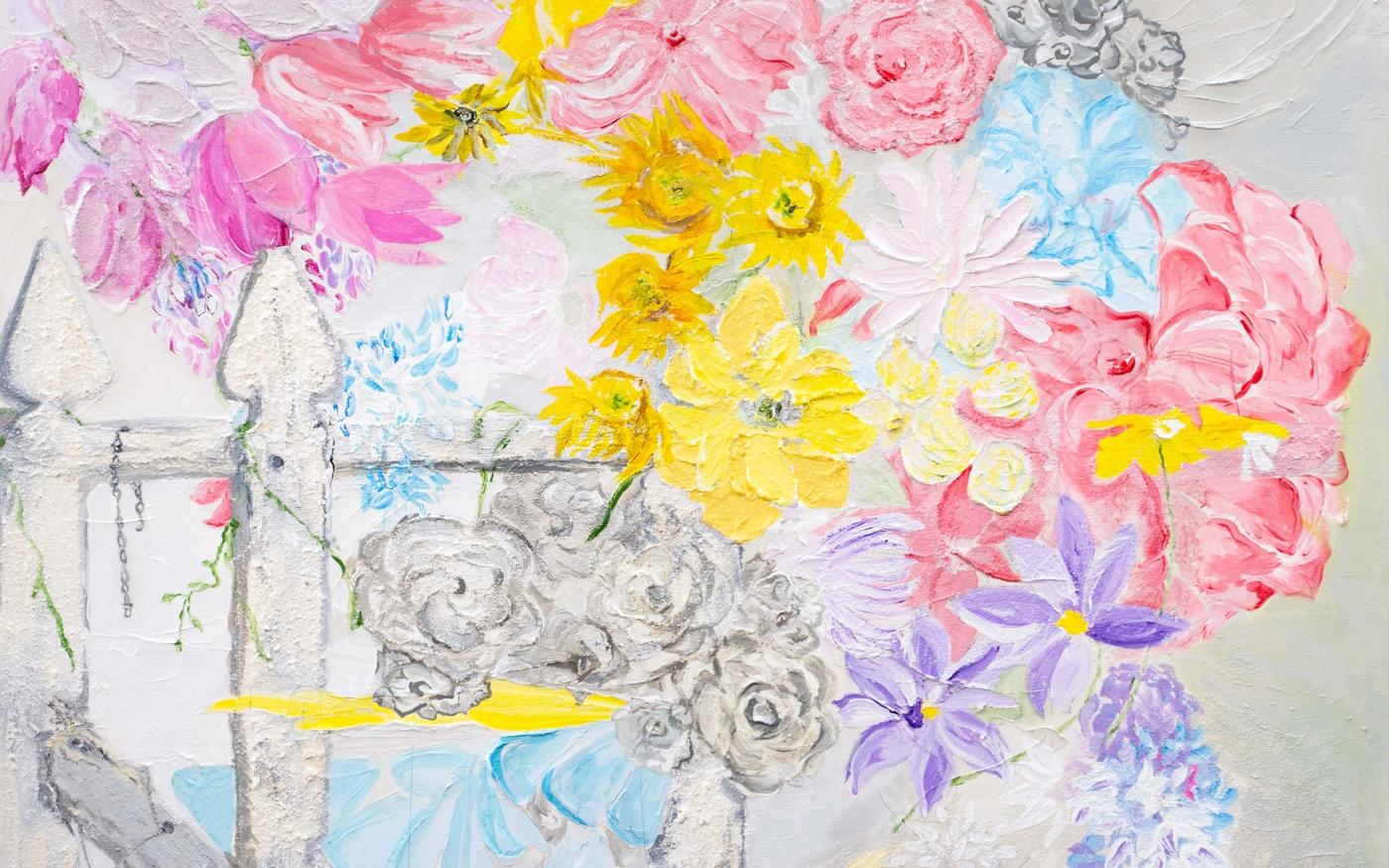
This is the heart of how I work. I often say, "I paint what the air feels like," because I care more about the feeling of a moment than its outline. Silver Necklace is a good example. It carries a story about a lost necklace: a young girl, examining the garden floor, comes upon a broken white-washed fence, and there, hanging from it, is her mom's silver necklace from years ago. In the painting, that subtle silver detail sits among thick, sculpted layers of garden air. It is the kind of thing you might miss the first day and treasure on the hundredth.
What to look for when buying a painting up close
Once the feeling is there, step in. Craftsmanship lives in the details, and you do not need a trained eye to see it, only a slower one.
Surface and texture
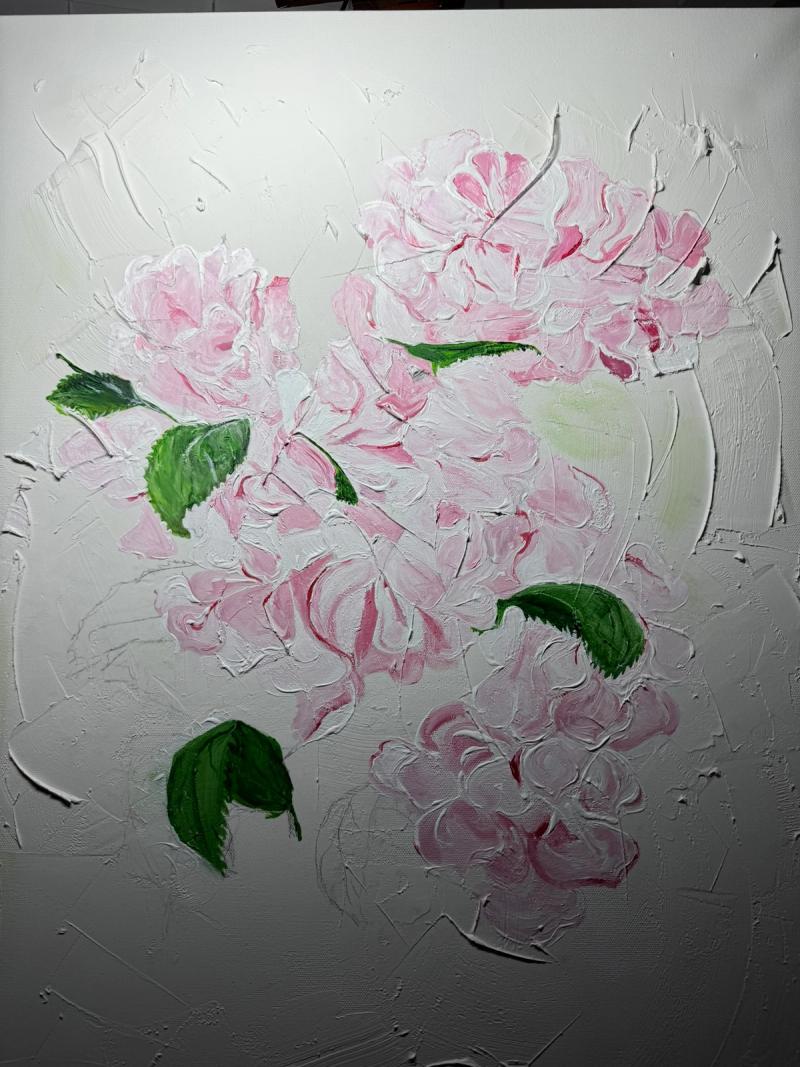
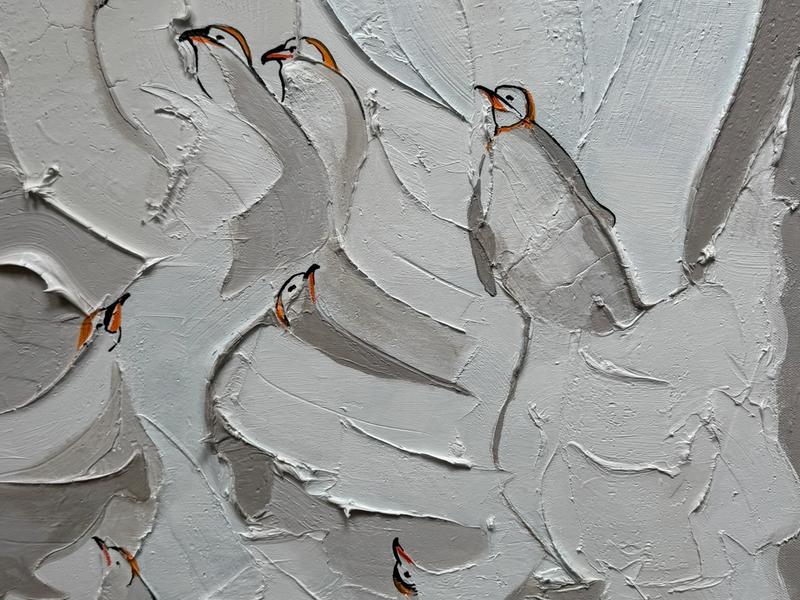
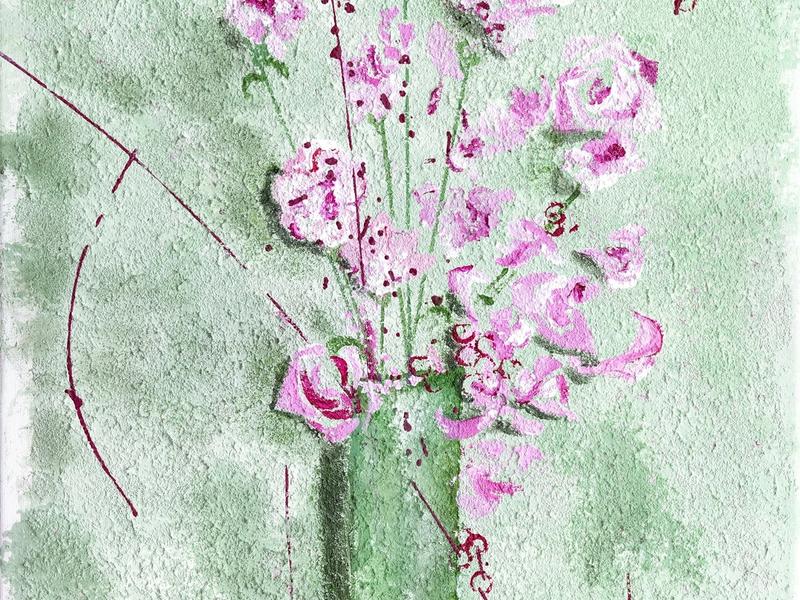
Look at how the paint was put down. Confident marks tend to look decisive: a stroke that starts and ends with purpose, layers that build on each other rather than fight. If you can, look across the surface at a low angle, or notice how side light from a window falls over it. On a textured painting, ridges and peaks should feel intentional, part of the image rather than accidental lumps.
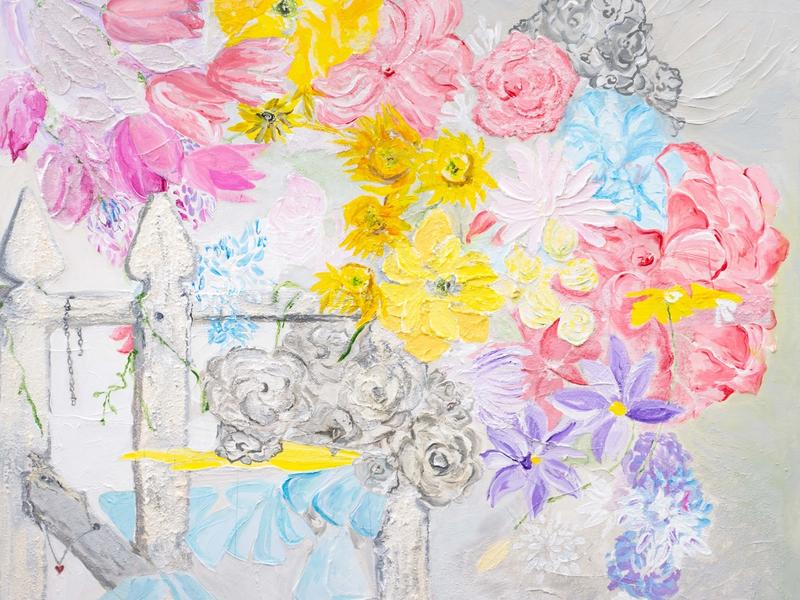
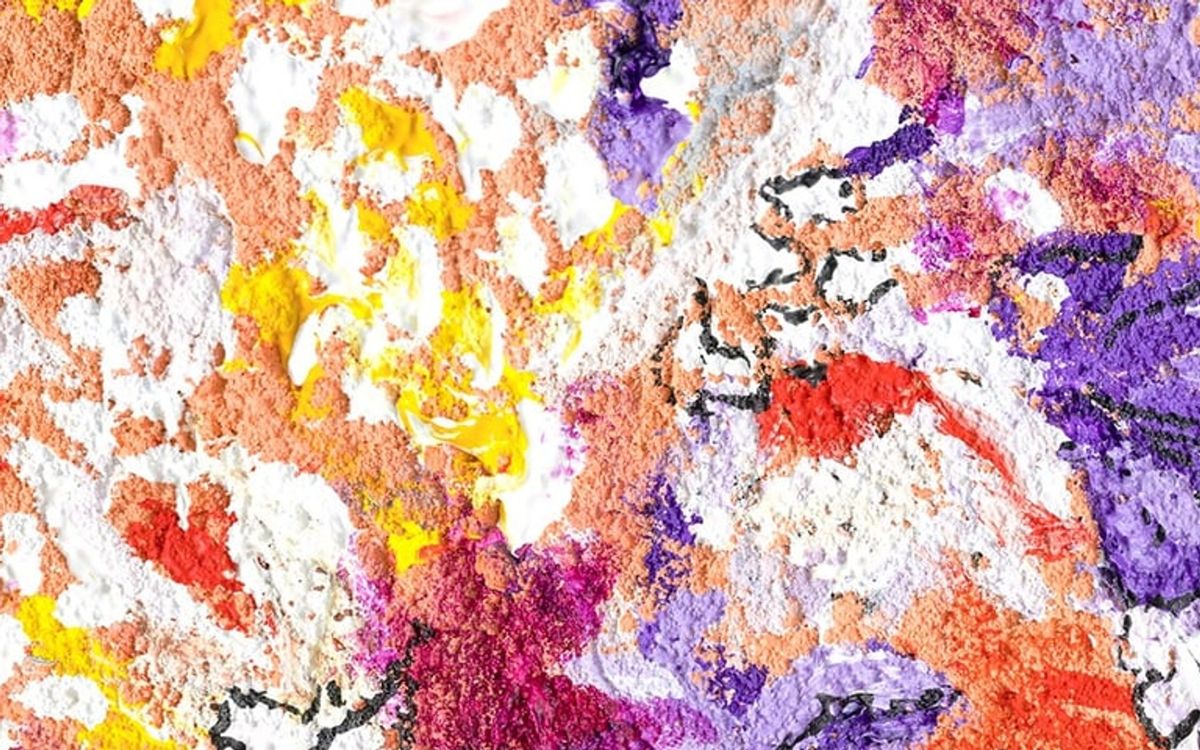
My own surfaces are built with heavy-body acrylic, applied thickly with palette knives and brushes, so you will see visible ridges and movement. As the light changes through the day, those raised edges cast small shadows, and the painting shifts with them. In A Colorful Affair, small and large strokes build up a full-bodied texture of violets, lilacs, golds and whites, so the bouquet feels as playful up close as it does from across the room. If you want to understand this kind of surface more deeply, I wrote about it in What Is Impasto Painting?.
Edges, sides and corners
The sides of a canvas are a quiet signal of care. Are they painted, or left raw? Are the corners folded neatly? Is the canvas taut, without ripples or soft spots? None of these are dealbreakers on their own, but together they tell you how the artist thinks about the whole object, not just the front.
On Dancing Into Spring, a heavy-body impasto on gallery-wrapped canvas, the painting continues around the edges, so the movement of the first spring blooms extends beyond the front of the frame. Many people choose to hang gallery-wrapped work just as it is, letting those sides be seen.
The signature
An original should be signed. It is a small thing, and also a promise: the artist stands behind this piece. My paintings are signed "JASTRU".
The support and how it is finished
The support is what the paint sits on: stretched canvas, a rigid panel, or paper. Each has its own needs. Canvas should feel firm on its stretcher bars. Works on paper usually want framing that protects them. Mixed media pieces can combine several materials, so it is worth asking what is in them and how they should be displayed.
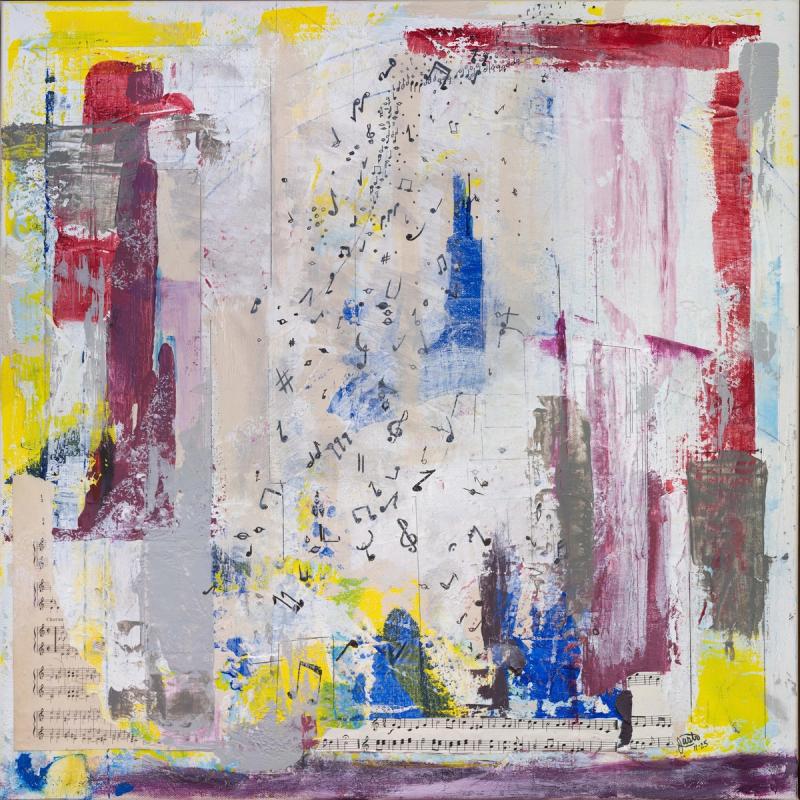
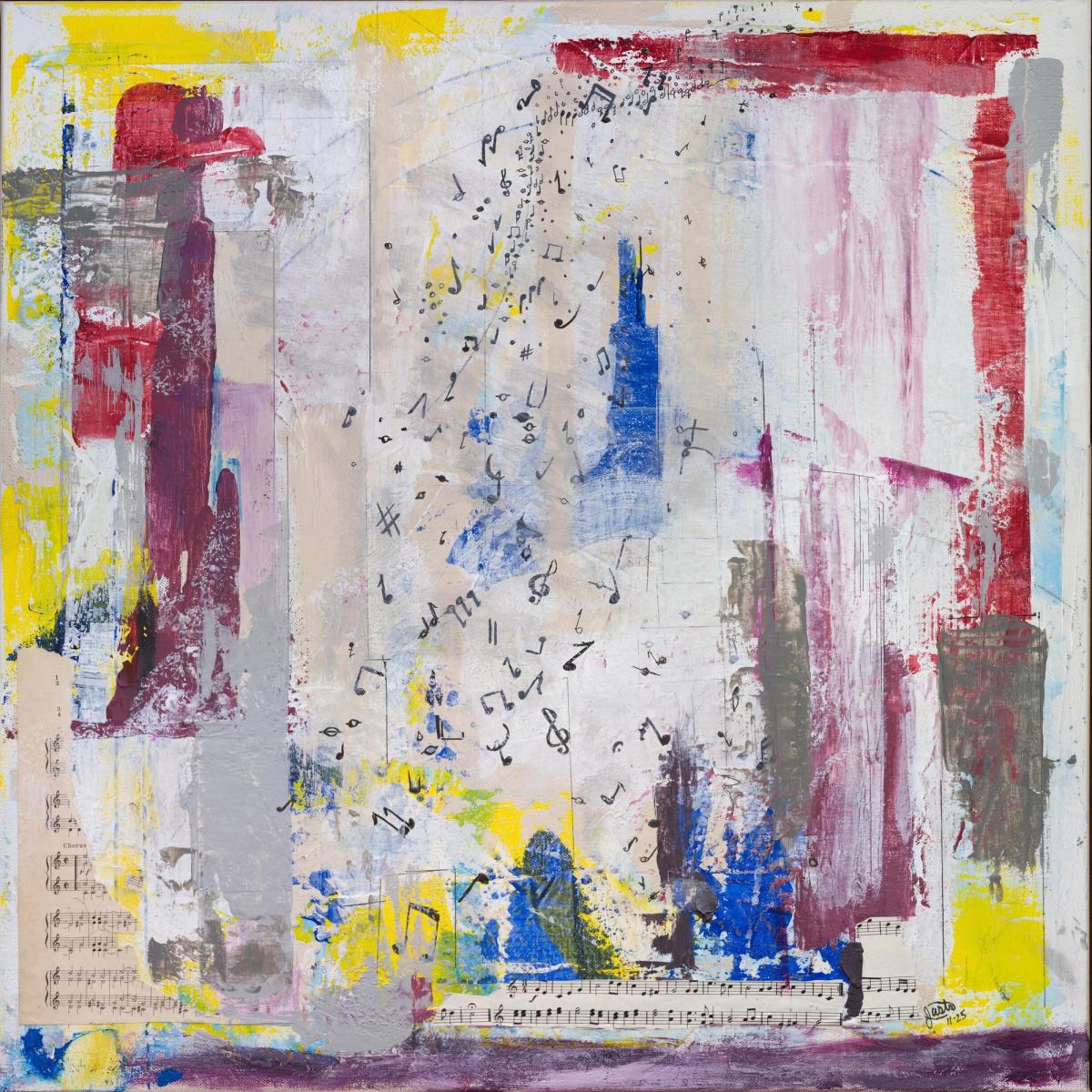
Then there is the finish. Some paintings come ready to hang on their own; others are presented in a frame. A floating frame leaves a small gap between the canvas and the frame, so the painting seems to hover and its edges stay visible. Symphonic Drift, a 24 × 24 mixed media piece, comes in a textured light-brown floating frame that sets off its sweeping layers of color, texture and light. A good question for any artist: how did you intend this to be presented, and does it come that way?
Size and scale for the room you live in
Size is where many first-time collectors second-guess themselves. A few practical habits help:
- Measure the wall, then mark it. Painter's tape in the shape of the canvas will tell you more than any mockup.
- Think about viewing distance. Where will you usually stand or sit? A large work wants room to step back; a smaller one rewards being passed closely every day.
- Relate it to the furniture. A common guideline is for a painting above a sofa or console to span roughly two-thirds of its width, but trust your eye over the rule.
- Consider the light. Textured paintings come alive with light from the side, so notice where your windows and lamps are.
Scale also changes how a painting feels. Silver Necklace is 36 × 36, large enough to hold a room and let you stand inside its garden air. A Colorful Affair is 16 × 20, an intimate size for a hallway, a reading corner or a spot by the bed where you will see it up close.
The medium and how it will age
It is worth understanding the medium, because it shapes both the look of a painting and how you will care for it. Artist-grade acrylics dry to a flexible, water-resistant film and are generally valued for their stability. Very thick layers, like impasto, can feel dry to the touch well before they have fully cured all the way through. For specifics on curing and long-term behavior, follow the paint maker's guidance or ask a conservator.
For everyday care, general good sense goes a long way: keep paintings out of strong direct sunlight, away from heat sources and damp, and avoid unnecessary contact with the painted surface. Raised texture is part of the artwork, so handle it with a little extra care. If you have a question about cleaning or preserving a particular painting, ask the artist, and for anything beyond gentle care, a conservator.
Know whether you are holding an original or a print
An original painting is made entirely by hand and exists once. A giclée print is a high-quality reproduction made from an original. Both have a place, but you should always know which one you are buying.
In my studio there is a middle path: hand-embellished giclée prints. Each begins as an archival reproduction of one of my paintings, and then I personally apply paint and texture to select areas, so every print carries real raised paint and no two are exactly alike. My FAQ explains the difference in more detail.
Buy from someone you can talk to
This may be the most important item on the list. A painting is not a transaction you complete and forget. Buying from someone you can reach means you can ask the questions that matter:
- What materials did you use, and how should I hang and care for it?
- How was it finished, and does it come framed?
- How will it be packed and shipped?
I handle inquiries personally because I want every collector to feel comfortable and informed. I inspect each piece before it leaves my care, and I pack every one myself with specialized packaging, because textured surfaces need protecting. Shipping is arranged after purchase, based on the size of the work and where it is going. And if you would like something made for your own space, every commission begins the same way: with a conversation about size, color and the feeling you want the painting to bring.
A painting you live with should feel like a relationship, not a purchase.
Come a little closer, whenever you are ready
If one of these paintings has been quietly calling you back, I would love to hear about it. You can use the "Inquire about a piece" button on any painting, write to me through the contact page, or email janet@janetstrugats.com. Ask me anything about a piece, its surface, its size or how it might live in your home, or let's talk about a commission. Consider it an open invitation to get in touch.